


The Complete Canadian Business Tax & Filing Calendar

Open monthly planner on a wooden desk

The Complete Canadian Business Tax & Filing Calendar

Open monthly planner on a wooden desk

Stay Ahead With Expert Bookkeeping Insights!

The Best Bookkeeping Tips Straight to Your Inbox!

Table of Contents

Two Calendars, Not One

The reason business owners miss deadlines is not carelessness. It’s that Canadian business compliance runs on two clocks at once, and most people only track one.

The calendar year governs payroll: remittances on the 15th of each month, T4 and T5 slips at the end of February, personal tax instalments in March, June, September and December. These dates are the same for every business in the country.

Your fiscal year governs everything corporate: the T2 return, the balance owing, corporate instalments, GST/HST if you file annually, and T5018 slips for contractors and trades. These dates are unique to you, and they are the ones that get missed — because a business with a 31 July year end has a corporate filing deadline in January that appears on no generic calendar.

Planner notebook with dates marked

Key Takeaways

  • Corporate deadlines run on your fiscal year; payroll and slip deadlines run on the calendar year. You need both.
  • For self-employed individuals, the filing deadline and the payment deadline are different dates — 15 June and 30 April.
  • Corporations file at six months but pay at two or three.
  • When a deadline falls on a weekend or public holiday, it generally moves to the next business day.
  • If you cannot pay, file anyway. Late-filing penalties are almost always larger than the interest on an unpaid balance.

The Calendar Year, Month by Month

DateObligationApplies to
15 JanuaryDecember payroll remittanceRegular remitters
30 JanuaryInterest on prescribed-rate loans for the prior yearIncome-splitting loan arrangements
Last day of FebruaryT4, T4A and T5 slips filed and distributedAll employers; corporations paying dividends
~1 MarchRRSP contribution deadline for the prior tax yearIndividuals — 60 days after year end
15 MarchFirst personal tax instalmentIndividuals over the instalment threshold
31 MarchT3 trust returns (90 days after a 31 Dec year end)Trusts
30 AprilT1 return due for most individuals — and balance owing for everyone, including the self-employedAll individuals
15 JuneT1 return due for self-employed individuals and their spouses; second instalmentSelf-employed
15 SeptemberThird personal instalmentIndividuals over the threshold
15 DecemberFourth personal instalmentIndividuals over the threshold
31 DecemberCharitable donations, medical expenses and other credits must be paid to count for the yearIndividuals

Two of these deserve emphasis. The 30 April row is the one that catches self-employed people every year: your return isn’t late until 15 June, but interest on any balance begins 1 May. And the last day of February slip deadline is absolute — penalties for late T4s are charged per slip, per day, so a business with twenty employees accumulates them quickly.

Tax-loss selling deserves a note of its own. To realise a capital loss in the current year the trade must settle by 31 December, and settlement timing has changed in recent years. Confirm the last eligible trading day each December rather than assuming it is the last business day.

Deadlines Tied to Your Fiscal Year

ObligationDue
T2 corporate return6 months after fiscal year end
Corporate balance owing — CCPC claiming the SBD3 months after year end
Corporate balance owing — all others2 months after year end
Corporate instalmentsMonthly, or quarterly for eligible small CCPCs
Annual GST/HST return — corporation3 months after year end
T5018 construction subcontractor slips6 months after the reporting period ends
T5013 partnership information returnVaries with partner composition — commonly 31 March or 5 months after year end

Work out your own dates once

Take your fiscal year end and add two, three and six months. Put those three dates in a calendar with reminders a month ahead of each. For a 30 September year end that’s 30 November (balance, non-SBD), 31 December (balance, CCPC) and 31 March (return). Ninety per cent of corporate deadline problems disappear with that one exercise.

GST/HST by Filing Frequency

FrequencyReturn duePayment due
MonthlyOne month after period endSame date
QuarterlyOne month after period endSame date
Annual — corporationThree months after year endSame date
Annual — self-employed individual, 31 Dec year end15 June30 April
Annual with instalments (net tax $3,000+)—One month after each quarter

Provincial Obligations

Federal deadlines are only part of the picture, and the provincial layer is where multi-province businesses lose track.

Provincial sales tax. BC PST, Manitoba RST, Saskatchewan PST and Quebec QST are filed separately with the province, on their own frequencies, which do not align with your GST/HST return.

Workers’ compensation. WSIB in Ontario, WCB in Manitoba, WorkSafeBC in British Columbia — each with its own registration requirement, premium remittance schedule and annual reconciliation. Registration is generally mandatory once you have employees, and in some industries for contractors too.

Employer payroll taxes. Ontario’s Employer Health Tax, Manitoba’s Health and Post-Secondary Education Tax Levy and BC’s Employer Health Tax each apply above a payroll threshold, with annual returns and — above higher thresholds — instalments. The exemption amounts differ by province and are adjusted periodically, so confirm your current threshold rather than relying on the figure you were told when you registered.

Corporate annual returns. Separate from the T2 and frequently forgotten. Federally incorporated companies file with Corporations Canada; provincial corporations file with their province. Missing these repeatedly can lead to dissolution, which is a genuinely disruptive thing to discover.

What Happens When You're Late

FilingPenalty
T1 / T2 return5% of the unpaid balance, plus 1% per complete month to a maximum of 12 — doubled for repeat failures within three years
GST/HST return1% of the amount owing, plus 25% of that per month late, to 12 months
Payroll remittance3% to 10% depending on how late; 20% for a knowing or grossly negligent repeat failure
T4 / T5 slipsPer-slip daily penalty, scaling with the number of slips
InstalmentsInstalment interest, and an additional charge where interest exceeds a set amount

Interest compounds daily on everything at the CRA’s prescribed rate, which is set quarterly. Interest and penalties on overdue tax are not deductible, which makes their real cost higher than the headline rate.

If circumstances genuinely outside your control caused the delay — serious illness, a natural disaster, a CRA error — the taxpayer relief provisions allow you to request cancellation of penalties and interest, generally for the previous ten calendar years. Relief is discretionary and requires documentation, but it is granted, and it is worth pursuing in real hardship rather than assuming refusal.

Building Your Own Calendar

A generic calendar is a reference; a personal one is a system. Build yours once, at the start of a fiscal year, with five inputs: your fiscal year end, your GST/HST filing frequency, your payroll remittance frequency, your province or provinces of operation, and whether you’re required to pay instalments.

From those five, every date you owe is determined. Put each in a shared calendar with a reminder two weeks ahead — long enough to gather what’s needed, short enough to still feel urgent. Assign an owner to each, even in a business of one, because “we both thought the other had it” is the most common explanation we hear for a missed filing.

Want Your Deadlines Mapped Once, Properly?

We build a filing calendar around your fiscal year, registrations and provinces — and then we run it for you.

Get your calendar built →

Related articles

image

Bookkeeping for Canadian Real Estate Investors & Agents

Stay Ahead With Expert Bookkeeping Insights! The Best Bookkeeping Tips Straight to Your Inbox! Table…
image

Bookkeeping for Canadian Dental & Medical Practices

Stay Ahead With Expert Bookkeeping Insights! The Best Bookkeeping Tips Straight to Your Inbox! Table…
image

Bookkeeping for Canadian Restaurants & Hospitality

Stay Ahead With Expert Bookkeeping Insights! The Best Bookkeeping Tips Straight to Your Inbox! Table…
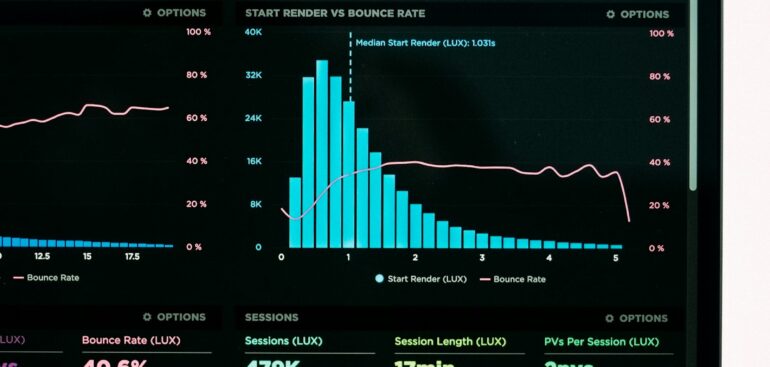

Choosing the Right Accounting Software for Your Canadian Business

Analytics dashboard on a laptop screen

Choosing the Right Accounting Software for Your Canadian Business

Analytics dashboard on a laptop screen

Stay Ahead With Expert Bookkeeping Insights!

The Best Bookkeeping Tips Straight to Your Inbox!

Table of Contents

Decide This Before You Compare

Feature comparisons are the least useful way to choose accounting software, because every mainstream platform does the core job competently. What differs is fit.

Answer these first. Do you carry inventory? Real inventory support is where cheaper platforms stop being adequate. Do you run payroll, and in how many provinces? Do you invoice in foreign currency? Do you need project or job costing — a near-requirement for trades and agencies, and absent or weak in several products. How many people need access, and at what permission level? And, importantly: what does your bookkeeper or accountant use?

That last question is not deference; it is economics. A platform your advisers know well means faster work, fewer billable hours spent fighting the tool, and a much easier time replacing a provider. Choosing something obscure to save $15 a month routinely costs multiples of that in professional fees.

Financial statistics displayed on a laptop

Key Takeaways

  • Choose for the Canadian edition, not the product. US-configured files get GST/HST wrong in ways that surface at your first review.
  • QuickBooks Online has the deepest Canadian bookkeeper pool. That matters more than feature checklists when you need help.
  • Correct sales tax setup — the right codes, the right provinces, the right filing frequency — is the single highest-value configuration step.
  • Most “software problems” are chart of accounts problems. Fix the structure before blaming the tool.
  • Migration carries real risk. Do it at a fiscal year end or not at all.

The Realistic Options in Canada

QuickBooks Online holds the largest share of the Canadian small business market and, consequently, the largest pool of bookkeepers and accountants who know it fluently. Its Canadian edition handles GST/HST, PST and QST natively, and its app ecosystem is the broadest. It is the default recommendation for most Canadian small businesses, and the reason is availability of support rather than technical superiority.

Xero is genuinely well designed, with a cleaner interface, unlimited users on every plan — a real advantage for businesses with several people needing access — and strong bank reconciliation. Its Canadian presence is smaller, so the local practitioner pool is thinner, and Canadian payroll requires a third-party integration rather than being native.

Sage 50 Canada, long familiar as Simply Accounting, remains common in established Canadian businesses, particularly those with inventory or job costing needs and a long transaction history. It is desktop-rooted with cloud options layered on, and is generally stronger on depth than on usability.

Wave is free for core accounting and invoicing, Canadian-built, and entirely reasonable for a sole proprietor with straightforward needs and no inventory. Businesses tend to outgrow it at the point payroll or multi-province sales tax enters the picture.

FreshBooks, also Canadian, is built around invoicing and time tracking for service businesses and freelancers. Excellent at what it targets; less complete as a general ledger.

Side by Side

QuickBooks OnlineXeroSage 50 CAWave
Canadian sales taxNative, strongNativeNative, strongBasic
Canadian payrollAdd-on moduleThird-party integrationAdd-on modulePaid, limited provinces
Users includedTiered by planUnlimitedTieredLimited
InventoryHigher tiersBasic to moderateStrongMinimal
Project / job costingHigher tiersVia add-onStrongNo
Multi-currencyHigher tiersHigher tiersYesLimited
Canadian practitioner poolLargestModerateModerateSmall

Plan names, tier boundaries and pricing change frequently and differ between Canadian and US editions. Verify current plan details on the vendor’s Canadian site before publishing, and re-check quarterly.

Sales Tax Setup Is the Real Test

This is where Canadian businesses lose the most money to bad configuration, and it is almost entirely preventable.

Set up your sales tax at the point you enable it, not later. Register the correct agency and number, set your filing frequency to match what the CRA assigned you, and — critically — create tax codes for every province you sell into, not just your own. A business that only ever configured Ontario HST will silently apply 13% to Alberta customers who should be charged 5%. Rates by province and the place-of-supply rules are set out in our GST/HST guide for Canadian small business.

Distinguish between zero-rated and exempt in your codes. They look identical on an invoice — both show no tax — but they behave differently on your return and in your input tax credit eligibility. Most platforms provide both; most users pick whichever appears first.

For businesses in BC, Manitoba, Saskatchewan or Quebec, remember that the provincial tax is a separate filing to a separate authority. Your software can track it, but it will not file it, and the deadlines do not align with your GST/HST return.

Finally, reconcile the sales tax liability account to the returns you actually filed, every period. A growing unexplained balance in that account is the earliest warning sign of a coding problem, and it is far cheaper to find in month three than at year end.

Payroll: Built In or Bolted On

Payroll is the most common reason a Canadian business changes platforms, and the decision deserves separate thought from the ledger decision.

Integrated payroll keeps journal entries automatic and avoids reconciliation work. Standalone providers often handle complex cases better — multiple provinces, union rules, unusual benefit structures — at the cost of an integration to maintain.

Whatever you choose, confirm three things: that it calculates CPP, CPP2 and EI correctly for the current year, that it files T4s and generates ROEs, and that it supports every province you employ people in. Quebec, with QPP and QPIP, is the one most likely to be unsupported or supported poorly. Spot-check any provider against the CRA’s Payroll Deductions Online Calculator for one employee each year.

The Apps Around the Ledger

The ledger is one piece. Most of the time saved in a modern setup comes from what sits around it.

Receipt capture — Dext, Hubdoc, or the vendor’s own tool — is the highest-return addition for most businesses. It solves the documentation problem that sinks input tax credit claims, and it removes the monthly chase for missing paperwork. Hubdoc is bundled with some QuickBooks and Xero plans; Dext is generally stronger at extraction and handling volume.

Payment processing integration matters more than owners expect. Stripe, Square and PayPal deposits arrive net of fees, so a deposit of $970 against a $1,000 invoice needs the $30 recorded as an expense rather than the invoice marked short-paid. Done manually this is tedious; done badly it distorts revenue.

Industry tools — job management for trades, practice software for professionals, point of sale for retail and hospitality — are frequently the actual system of record, with accounting downstream. Check the integration quality before choosing either side of that pair.

Migrating Without Losing History

Migration is where good decisions go wrong. Three rules keep it manageable.

Move at a fiscal year end. Mid-year migrations mean comparative reporting spans two systems for the rest of the year, and every variance analysis becomes a manual exercise.

Decide deliberately how much history to bring. Opening balances only is cleanest and cheapest. Full transactional history is expensive and rarely necessary, provided you retain access to the old system in read-only form — which you must, because the CRA’s six-year retention requirement applies to the records, not the software.

Run parallel for one period. One month in both systems, with the results reconciled, catches mapping errors while they are still small. It feels like waste and it is the cheapest insurance in the process.

Expensive Setup Mistakes

A chart of accounts with 200 accounts. More detail is not more insight. A small business generally needs 30 to 60 accounts (see small business accounting basics); beyond that, coding becomes inconsistent and reports become unreadable. Use classes, departments or tags for the dimensions you actually analyse.

Auto-categorisation rules set once and never reviewed. Bank rules are a genuine time saver and a genuine risk. A rule that miscodes a recurring payment will do so silently for a year.

Connecting personal accounts. If a personal card is connected, personal spending lands in the business file and has to be removed by someone billing hourly.

Nobody owning the reconciliation. Bank feeds import transactions; they do not reconcile them. An unreconciled file looks complete and is not.

The provider owning the subscription. Covered in our guide on how to hire a bookkeeper in Canada, and worth repeating: the subscription should be in your name, with you as primary admin, and your bookkeeper invited as a user.

Setting Up or Switching Platforms?

Our cloud accounting setup service configures QuickBooks Online and Xero for Canadian sales tax and payroll, migrates your history, and reconciles the first period alongside you.

Talk to us about setup →

Related articles

image

Bookkeeping for Canadian Real Estate Investors & Agents

Stay Ahead With Expert Bookkeeping Insights! The Best Bookkeeping Tips Straight to Your Inbox! Table…

image

Bookkeeping for Canadian Dental & Medical Practices

Stay Ahead With Expert Bookkeeping Insights! The Best Bookkeeping Tips Straight to Your Inbox! Table…

image

Bookkeeping for Canadian Restaurants & Hospitality

Stay Ahead With Expert Bookkeeping Insights! The Best Bookkeeping Tips Straight to Your Inbox! Table…

How to Hire a Bookkeeper in Canada

Business owner shaking hands with a new bookkeeper across a desk

How to Hire a Bookkeeper in Canada

Business owner shaking hands with a new bookkeeper across a desk

Stay Ahead With Expert Bookkeeping Insights!

The Best Bookkeeping Tips Straight to Your Inbox!

Table of Contents

When to Stop Doing It Yourself

Almost every owner does their own books at the start, and almost every owner keeps doing it for about a year longer than they should.

The usual signals are not about transaction volume. They are about consequences. You have filed something late. You have missed a payroll remittance, or paid one twice. You cannot tell, without opening the bank app, whether last month was profitable. You are pricing work on instinct because you do not know your actual cost. Your accountant’s year-end bill has crept upward with a line about “additional bookkeeping required.”

That last one is the most quantifiable. If year-end cleanup is costing $2,000 to $4,000 because the year arrives as a shoebox, you are already paying for bookkeeping — you are just paying CPA rates for it, once a year, by someone who has to guess at what your transactions were.

The other honest calculation is your own time. An owner spending eight hours a month on data entry is spending roughly a hundred hours a year. If your billable rate or the value of your selling time exceeds what a bookkeeper charges, the arithmetic is settled before you start.

Bookkeeper reviewing documents with a calculator and laptop

Key Takeaways

  • The trigger to hire is usually not volume — it’s the first month you file late, miss a remittance, or can’t answer a simple question about your own numbers.
  • “Bookkeeper”, “accountant” and “CPA” are not interchangeable, and only CPA is a protected designation.
  • A cheap bookkeeper who codes badly costs more than a good one, because someone bills to fix it at year end.
  • Ask who does the work, who reviews it, and what happens when the CRA writes. The answers separate firms fast.
  • You own your data. Any provider who makes leaving difficult is telling you something.

Bookkeeper, Accountant or CPA?

The titles are used loosely and the differences matter.

A bookkeeper records transactions, reconciles accounts, runs payroll, prepares GST/HST filings and produces monthly statements. It is an unregulated title in Canada — anyone may use it — though many hold certifications from recognised bodies such as CPB Canada, and software certifications from Intuit or Xero indicate at least tested competence with the tool.

An accountant, used generically, is also unregulated. It may mean someone with a degree, someone with years of practical experience, or someone who has simply chosen the word.

A CPA is a protected designation requiring a specific education path, a common final examination, supervised practical experience, mandatory continuing education, professional liability insurance and a complaints process with a regulator behind it. Only a CPA can issue an audit or review engagement report.

Most small businesses need both functions: a bookkeeper for the monthly work, and a CPA for year end, tax filings and planning. Firms that provide both under one roof remove the handoff, which is where a surprising amount of cost and error lives.

What It Costs in Canada

Pricing varies by province, complexity and delivery model. The ranges below reflect what we typically see in the Canadian small business market; treat them as orientation rather than quotation.

ModelTypical rangeUsually suits
Freelance bookkeeper, hourly$30–$60 / hourLow volume, simple structure, owner still involved
Firm bookkeeping, hourly$60–$110 / hourBusinesses wanting review and continuity
Monthly package, micro business$300–$600 / monthUnder ~100 transactions, no payroll
Monthly package, small business$600–$1,500 / monthPayroll, sales tax, multiple accounts
Controller-level support$1,500+ / monthReporting, forecasting, decision support
In-house bookkeeper$50,000–$70,000 + ~15%High volume or heavily industry-specific work

What drives the number is rarely revenue. It is transaction count, number of bank and credit card accounts, payroll headcount and frequency, sales tax registrations across provinces, inventory, foreign currency, and how clean the starting position is. Two businesses with identical revenue can differ threefold in bookkeeping cost.

Hourly, Monthly or In-House

Hourly is transparent and fine for genuinely light work, but it has a structural problem: it prices your provider’s inefficiency as your cost, and it makes you hesitate before asking a question. Owners on hourly arrangements ask fewer questions, which is the opposite of what you want.

Fixed monthly is now the norm for good reason. You budget a known amount, the provider carries the efficiency risk, and asking a question costs nothing. Insist that the scope is written down — what is included, what is extra, and what happens if volume changes materially.

In-house makes sense at genuine scale or where the work is deeply specific to your operation. Remember the true cost: salary plus CPP, EI, vacation, benefits, software licences, training, and the fact that one person means no coverage during holidays, illness or a resignation — and no second pair of eyes, which is also an internal control problem.

Questions That Actually Reveal Something

Most interview questions produce rehearsed answers. These don’t.

  • Who will actually do my work, and who reviews it? A named person and a review step is the single strongest quality signal. “Our team” usually means an unsupervised junior.
  • What happens when the CRA sends a letter? Listen for whether they act as your authorized representative with the CRA, and whether that’s included or billed.
  • What does your onboarding look like for a business that’s behind? Anyone who doesn’t ask about your current state before quoting is guessing.
  • How and when do I get my statements? A specific date each month, with a review conversation, beats “whenever it’s done”.
  • Which of my filings are you responsible for, and which stay with me? Ambiguity here is where missed deadlines come from.
  • Do you carry professional liability insurance? A one-word answer, and a meaningful one.
  • If I leave in a year, what do I get? The correct answer is: full access to your file, in a standard format, at no charge.
  • Who else in my industry do you work with? Industry familiarity shortens every conversation and reduces coding errors.

Red Flags in a Quote

A price given before anyone looked at your books. Either it will rise, or the work will be shallow.

No written scope. “Full bookkeeping” is not a scope. Sales tax filing, payroll, year-end file preparation and CRA correspondence should each be named as in or out.

Markedly below market. Bookkeeping has a labour floor. A quote at half the going rate means offshore junior work with no review, software the provider doesn’t know well, or work that simply won’t be done — and you will discover which at year end.

They hold the software subscription. Your accounting file should be in your own subscription, with you as the account owner. Our guide to choosing accounting software for a Canadian business covers how to set this up. Providers who own the file own your leverage.

No CPA involved anywhere. Fine for pure data entry. Not fine if anyone is advising on structure, salary versus dividends, or sales tax treatment.

Vague on turnaround. Books closed 60 days after month end are a historical record, not a management tool.

What Good Looks Like

A well-run monthly engagement produces, reliably and without chasing: all accounts reconciled to statement balances; a profit and loss, balance sheet and cash flow summary within a defined number of business days after month end; sales tax and payroll filings submitted on time with confirmations; a short note flagging anything unusual; and a year-end file your CPA can use without rebuilding.

You should also expect to be asked questions. A bookkeeper who never queries a transaction is coding by assumption, and assumptions accumulate into a year-end problem.

Switching Providers

Owners stay with providers they have outgrown mainly because switching feels risky. It is manageable if you sequence it.

Confirm first that you control the subscription and are the account owner — if not, fix that before anything else. Choose a clean cutover date, ideally a fiscal year end or at minimum a month end following a completed sales tax period. Get written confirmation of exactly which filings the outgoing provider completed and which remain open; this is the detail that falls through the gap. Export a full backup and your source documents before access changes. The CRA expects you to keep those records for six years regardless of who did the bookkeeping. Then have the incoming provider review the closing position and tell you plainly what they found.

That last step matters. A new provider who says “everything looks fine” after inheriting three years of someone else’s coding has not looked. Expect a short list of issues, and treat it as the first useful thing they produced.

Want a Straight Answer on What Your Books Should Cost?

We’ll look at your actual file, tell you what condition it’s in, and quote from that. No charge for the review.

Request a book review →

Related articles

image

Bookkeeping for Canadian Real Estate Investors & Agents

Stay Ahead With Expert Bookkeeping Insights! The Best Bookkeeping Tips Straight to Your Inbox! Table…
image

Bookkeeping for Canadian Dental & Medical Practices

Stay Ahead With Expert Bookkeeping Insights! The Best Bookkeeping Tips Straight to Your Inbox! Table…

image

Bookkeeping for Canadian Restaurants & Hospitality

Stay Ahead With Expert Bookkeeping Insights! The Best Bookkeeping Tips Straight to Your Inbox! Table…

Tax Planning for Canadian Owner-Managers

Business owner reviewing finances on a tablet

Tax Planning for Canadian Owner-Managers

Business owner reviewing finances on a tablet

Stay Ahead With Expert Bookkeeping Insights!

The Best Bookkeeping Tips Straight to Your Inbox!

Table of Contents

The Idea Behind It All

Canadian tax policy tries to make the corporation invisible. If integration worked perfectly, a dollar earned through your company and paid out to you would cost exactly what a dollar earned directly would.

It doesn’t work perfectly — there are modest advantages and disadvantages depending on province and income type — but it works well enough that you should stop looking for a structure that makes income tax-free. There isn’t one. What a corporation genuinely gives you is control over timing, and timing is worth a great deal.

Money left in the corporation has been taxed at roughly 11%. The remaining 89 cents can be invested, used to fund growth, or held against a lean year. Had you earned the same income personally at a 45% marginal rate, you would be investing 55 cents. Over a decade that difference compounds substantially — and you choose which year the personal tax is triggered.

Business owner reviewing a tablet by an office window

Key Takeaways

  • Canada’s system aims at integration — earning through a corporation and paying it out should cost roughly the same as earning it personally. The advantage is timing, not rate.
  • Salary builds RRSP room and CPP entitlement; dividends avoid CPP but build neither. Most owners should take some of each.
  • A shareholder loan not repaid by the end of the following fiscal year becomes personal income in full.
  • TOSI ended most casual income splitting in 2018. Paying a spouse or adult child requires meeting a specific exclusion, not just issuing shares.
  • The lifetime capital gains exemption is $1,275,000 for 2026 — but qualifying for it requires conditions met over the 24 months before a sale.

Salary versus Dividends

SalaryDividend
Corporate deductionYes — reduces corporate taxNo — paid from after-tax income
CPPBoth halves, ~$9,300 at the ceilingNone
RRSP roomYes — 18% of earned income to the annual limitNone
Payroll administrationSource deductions, T4, remittancesT5 slip, director’s resolution
Personal taxOrdinary ratesGross-up and dividend tax credit
Supports a mortgage applicationReadilyOften with more difficulty

Dividends come in two flavours. Non-eligible dividends are paid from income that was taxed at the small business rate and carry a smaller gross-up and credit. Eligible dividends come from income taxed at the general rate, tracked in the GRIP account, and are taxed more favourably in your hands. Most owner-managers of small CCPCs are paying non-eligible dividends.

Choosing Your Mix

There is no universal answer, but there are reliable considerations.

Take enough salary to maximise RRSP room if you intend to use it. RRSP room accrues at 18% of earned income, and dividends generate none. An owner who takes only dividends for a decade arrives at retirement with no registered room and no CPP.

CPP is a genuine choice, not simply a cost. The combined 11.90% feels like pure expense, but it buys an indexed, government-backed lifetime pension. Owners who dismiss it should be doing so because they have a deliberate alternative plan, not because the deduction is annoying.

Dividends are more flexible. They can be declared after year end when the numbers are known, adjusted to the actual result, and don’t require monthly remittances. For businesses with volatile income this is a real administrative advantage.

Watch the bracket. Where a large one-off dividend would push you into a higher bracket, splitting it across two calendar years is often worth more than any structural planning.

Shareholder Loans

If you take money from the corporation that isn’t salary, dividend, or repayment of something the company owes you, it is a loan — and section 15(2) of the Income Tax Act governs it.

The rule: a loan to a shareholder must be repaid by the end of the corporation’s fiscal year following the one in which it was made, or the entire amount is included in the shareholder’s income for the year it was received. Not the interest. The whole balance.

Repaying just before year end and redrawing immediately after is specifically anticipated — the rules look for a series of loans and repayments and will treat them as continuous. There are narrow exceptions, including loans for a home purchase or to acquire shares of the employer, but they carry their own conditions including a bona fide repayment schedule.

While a loan is outstanding you also have a taxable interest benefit, calculated at the CRA’s prescribed rate, unless you pay the corporation interest at that rate within 30 days of year end.

The account that runs the wrong way

Many owners have a shareholder loan account that is genuinely in their favour — they lent the company startup money, or paid business expenses personally. Drawing that down is tax-free, because you are being repaid your own capital. The problem is that almost nobody tracks the balance properly. Keep it clean: it is the cheapest money you will ever take out of your company, and it is worthless if you cannot prove it.

Paying Family Members

Paying a spouse or adult child a salary is legitimate where the work is real and the pay is reasonable for that work. Both conditions matter. The CRA will disallow a $60,000 salary for a few hours of administration, and it will look closely where the amount lands conveniently at the top of a low bracket.

Document as you would for any employee: a job description, time records, pay at a defensible market rate, actual payments into their own bank account, proper source deductions and a T4. A salary that exists only as a year-end journal entry is the easiest adjustment an auditor will make all week.

TOSI

The tax on split income rules, substantially expanded in 2018, are the reason the old approach of issuing shares to a spouse and paying dividends no longer works by default. Where TOSI applies, the dividend is taxed at the highest marginal rate regardless of the recipient’s own income, eliminating the benefit entirely.

TOSI is the default for dividends paid to a related individual, and you must fit within an exclusion to avoid it. The main ones:

  • Excluded business — the individual worked in the business an average of 20 hours a week during the year, or in any five previous years.
  • Age 25 and owning 10% or more of votes and value, where the business is not a professional corporation and earns less than 90% of its income from services.
  • Age 65 owner — amounts that would have been excluded for the owner can be paid to their spouse, a deliberate retirement-splitting provision.
  • Reasonable return, judged on labour and capital contributed and risk assumed — narrower for those aged 18 to 24.

These are technical tests with real consequences for getting them wrong. Do not restructure share ownership on the strength of a summary like this one.

Where to Put Excess Cash

Profit accumulating in the corporation has to go somewhere, and the options interact with the passive income rules described in the T2 corporate tax guide.

Leave it and invest inside the corporation. You are investing pre-tax dollars, which is powerful, but investment income is taxed at roughly 50% corporately, and once it passes $50,000 a year it starts grinding down your small business limit on operating profit.

Pay salary and contribute to an RRSP. Straightforward, creates room, and moves money into a fully tax-sheltered environment. Costs CPP on the way out.

Pay dividends and fund a TFSA. No CPP, and TFSA growth is genuinely tax-free rather than deferred.

An individual pension plan may allow larger deductible contributions than an RRSP for older, higher-earning owners, at the cost of complexity and actuarial fees.

Most owners end up with a combination, and the right one shifts as the corporation’s investment portfolio grows toward the $50,000 threshold.

The Lifetime Capital Gains Exemption

On a sale of qualifying small business corporation shares, the LCGE shelters a lifetime total of $1,275,000 for 2026 in capital gains — indexed annually. For a business owner this is the largest single tax benefit available in the Act, and it applies per individual, which is why family ownership structures can multiply it.

Qualifying is the hard part, and it is tested against conditions in the period before the sale:

  • At the time of sale, 90% or more of the fair market value of the corporation’s assets must be used in an active business carried on primarily in Canada.
  • Throughout the 24 months before the sale, more than 50% of asset value must have met that active business test.
  • The shares must not have been owned by anyone other than you or a related person during those 24 months.

The 90% test is what catches people. A corporation holding surplus cash, a portfolio, or a building not used in the business can fail it on the day of sale — and the fix, moving those assets out, is a transaction with its own tax consequences that needs to happen well in advance. This is the clearest example in Canadian tax of planning that must start years before the event.

Planning an Exit

Buyers usually want to buy assets; sellers usually want to sell shares. A share sale gives the vendor access to the LCGE and a clean exit; an asset sale gives the purchaser a stepped-up cost base and leaves known liabilities behind. The gap between those preferences is negotiated in price.

An asset sale also leaves cash inside your corporation, which must then be extracted — potentially triggering a second layer of tax, though the capital dividend account can move part of it out tax-free.

The practical advice is unglamorous: start three years out — the tax and bookkeeping side of selling a business covers the sequence. Purify the balance sheet so the 90% test is met, get financial statements into a state a buyer’s advisers will accept without discounting, document that the business runs without you, and resolve any shareholder loan balances. Businesses sold on six weeks’ notice are sold at a discount, and much of that discount is tax that could have been planned away.

Taking Money Out Without a Plan?

Our corporate tax team models salary and dividend combinations against your actual numbers, and flags the TOSI and loan issues before they become assessments.

Book a planning session →

Related articles

image

Bookkeeping for Canadian Real Estate Investors & Agents

Stay Ahead With Expert Bookkeeping Insights! The Best Bookkeeping Tips Straight to Your Inbox! Table…

image

Bookkeeping for Canadian Dental & Medical Practices

Stay Ahead With Expert Bookkeeping Insights! The Best Bookkeeping Tips Straight to Your Inbox! Table…

image

Bookkeeping for Canadian Restaurants & Hospitality

Stay Ahead With Expert Bookkeeping Insights! The Best Bookkeeping Tips Straight to Your Inbox! Table…

T2 Corporate Tax in Canada: A Founder’s Guide

Team in a boardroom listening to a presenter at the whiteboard

T2 Corporate Tax in Canada: A Founder’s Guide

Team in a boardroom listening to a presenter at the whiteboard

Stay Ahead With Expert Bookkeeping Insights!

The Best Bookkeeping Tips Straight to Your Inbox!

Table of Contents

A Separate Taxpayer

The moment you incorporate, you create a second person in the eyes of the tax system — one that files its own return, pays its own tax, and owns its own money.

That last point is where most new incorporators get into trouble. The corporation’s bank account is not yours. Money moves from the company to you only through a defined route — salary, dividend, repayment of a loan you made, or a reimbursement of a real expense — and each route has its own tax consequence and its own paperwork. Taking money without choosing a route creates a shareholder loan, and shareholder loans have rules with teeth.

The corporation also chooses its own fiscal year end, which need not be 31 December. A year end that falls after your busy season gives you time to plan; one that falls in the middle of it guarantees rushed decisions. You pick it once, on the first return, and changing it later requires CRA approval.

People having a business meeting at a boardroom table

Key Takeaways

  • A Canadian-controlled private corporation pays roughly 9–11% combined on its first $500,000 of active business income — the single largest planning advantage available to Canadian owners.
  • That advantage is a deferral, not a saving. Tax is largely equalised when you take the money out personally.
  • The T2 is due six months after year end, but the balance is due at two or three months. Filing on time is not the same as paying on time.
  • Associated corporations share one $500,000 limit. Owners with multiple companies routinely discover this too late.
  • A personal services business loses the small business deduction entirely, pays an extra 5% federal tax and can deduct almost nothing. It is the most expensive classification in the Act.

The Small Business Deduction

The small business deduction reduces the federal corporate rate from the general 15% to 9% on the first $500,000 of active business income earned by a Canadian-controlled private corporation. Every province offers its own reduced rate on the same band.

Three words in that sentence do real work. Active excludes investment income, which is taxed at a much higher corporate rate. Canadian-controlled excludes corporations controlled by non-residents or public companies. And private excludes public corporations.

The economics are a deferral. If your corporation earns $200,000 and you need $90,000 to live on, you pay yourself $90,000 and leave $110,000 taxed at roughly 11%. Had you earned the same amount as a sole proprietor, the entire $200,000 would be taxed at personal rates that top out far higher. The deferred tax comes due when you eventually take the money out — but in the meantime you are investing pre-tax dollars, and you control the timing.

Rates by Province

2026Small business (federal + provincial)General (federal + provincial)
Ontario9% + 3.2%, falling to 2.2% on 1 July 202615% + 11.5%
Manitoba9% + 0%15% + 12%
British Columbia9% + 2%15% + 12%

Ontario’s small business rate reduction takes effect part-way through 2026, so a corporation with a year end straddling 1 July applies a blended rate proportionate to the days in each period. Provincial rates and thresholds move with each provincial budget — confirm at filing.

Manitoba’s 0% provincial small business rate means a Manitoba CCPC pays only the 9% federal rate on its first $500,000, one of the lowest effective rates in the country. Provincial small business income limits do not always match the federal $500,000, which matters most for businesses operating across more than one province and allocating income between them.

What Erodes the SBD

The $500,000 limit is not guaranteed. Three mechanisms reduce or eliminate it, and they catch successful businesses precisely when they least expect it.

Association

Associated corporations share a single $500,000 business limit and must file an agreement allocating it. Corporations are associated through common control, and the rules reach further than most owners assume — they take in shares held by spouses, minor children and certain trusts, and they can associate two companies that have no commercial relationship at all. If you or your family control more than one corporation, this needs checking before year end, not at filing.

Passive investment income

Where a corporation and its associated group earn more than $50,000 of adjusted aggregate investment income in a year, the business limit is reduced by $5 for every $1 above that, disappearing entirely at $150,000. A corporation that has accumulated retained earnings and invested them can lose its small business rate on operating profits as a result — a genuinely counterintuitive outcome that makes the choice of where to hold investments a planning question.

Taxable capital

The business limit is also reduced where taxable capital employed in Canada exceeds $10 million across the associated group, phasing out completely at $50 million. Most small businesses never approach this, but capital-intensive ones can.

Deadlines and Instalments

ObligationDue
T2 returnSix months after fiscal year end
Balance owing — CCPC claiming the SBD, within limitsThree months after year end
Balance owing — all other corporationsTwo months after year end
InstalmentsMonthly, or quarterly for eligible small CCPCs

The split between the filing deadline and the payment deadline is the detail that costs money. A 31 December year end means the return isn’t late until 30 June, but interest starts accruing on any unpaid balance from 1 April. Owners who file in June and pay then have been accruing interest for three months without realising it. Map these against your own year end with our Canadian business tax filing calendar.

Eligible small CCPCs — broadly, those claiming the small business deduction with a clean compliance record and taxable income under a set threshold — may pay instalments quarterly rather than monthly. It is worth confirming eligibility, because quarterly instalments are materially easier to manage.

The late-filing penalty is 5% of the unpaid balance plus 1% per complete month, up to twelve months, and doubles for repeat failures. A corporation with nothing owing still must file: a nil T2 is mandatory for every corporation resident in Canada, including dormant ones.

The Personal Services Business Trap

A personal services business exists where an individual provides services through a corporation, and would reasonably be regarded as an employee of the client but for the existence of that corporation — provided the worker is a specified shareholder and the company doesn’t employ more than five full-time employees.

The consequences are severe and stacked:

  • No small business deduction, and no general rate reduction — so PSB income sits at the unreduced 28% federal rate, plus an additional 5% PSB tax, for 33% federally before provincial tax. With Ontario’s 11.5% that is 44.5% combined, against roughly 12% for ordinary small business income.
  • Deductions are limited to essentially salary and benefits paid to the incorporated employee, plus a narrow list of other items. Rent, equipment, software, professional fees and most ordinary business costs are denied.
  • Assessments typically reach back across every open year.

The exposure is highest for contractors with a single client, IT and engineering consultants placed through agencies (see bookkeeping for consultants and professional services), and medical professionals working through one facility (see bookkeeping for dental and medical practices). The protective factors are the same ones that distinguish a contractor from an employee: multiple clients, your own tools, control over how and when work is done, real financial risk, and the right to subcontract. If your corporation has one client and always has, this deserves a proper review rather than optimism.

Passive Income and the Notional Accounts

Investment income earned inside a corporation is taxed at a high rate — roughly 50% combined — specifically to remove the incentive to shelter portfolio income in a company. Part of that tax is refundable when taxable dividends are paid out, tracked through a notional account called RDTOH.

Two other notional accounts matter to owners. The capital dividend account accumulates the non-taxable half of capital gains and certain life insurance proceeds, and can be paid out to shareholders entirely tax-free by election — one of the most valuable and most frequently overlooked planning tools available to a private corporation. GRIP determines how much of a dividend can be designated “eligible”, which carries a lower personal tax rate for the recipient.

None of these appear on a bank statement. They exist only in the corporation’s tax records, and if nobody is tracking them, benefits are simply lost. A CDA balance that goes unclaimed before a company is wound up is money left on the table permanently.

Getting Money Out

Salary is deductible to the corporation, creates RRSP contribution room, and triggers CPP on both sides. Dividends are paid from after-tax corporate income, create no RRSP room and attract no CPP, and are taxed personally through the gross-up and credit mechanism. Neither is universally better, and the right mix changes with your income level, province, and whether you want CPP entitlement.

Shareholder loans are the third route and the one that causes trouble. If you draw money that is neither salary nor dividend, it is a loan from the corporation, and it must generally be repaid by the end of the following fiscal year or the full amount is included in your personal income. Repaying and immediately redrawing to sidestep this is specifically anticipated by the rules. Loans that remain outstanding also attract a taxable interest benefit.

This is covered properly in our tax planning guide for owner-managers, which is where the salary-versus-dividend arithmetic actually lives.

What the T2 Filing Actually Involves

A T2 is not a single form. It is a return plus a set of schedules, and the ones that matter most to a small corporation include the GIFI financial statements, Schedule 1 reconciling accounting income to taxable income, Schedule 8 for capital cost allowance, Schedule 50 for shareholder information, Schedule 100/125 for the balance sheet and income statement, and Schedule 7 where there is investment income.

Schedule 1 is the conceptual heart of it. Accounting profit and taxable income are different numbers, and the schedule bridges them — adding back non-deductible items like the 50% of meals, accounting depreciation and club dues, then deducting CCA and other tax-specific amounts. An owner who understands only one schedule should understand this one, because it explains why the tax bill never matches the profit on the income statement.

First Corporate Year End Coming Up?

Our corporate tax service prepares T2 returns for owner-managed corporations in Ontario, Manitoba and BC — including the planning conversation that should happen before year end, not after.

Book a consultation →

Related articles

image

Bookkeeping for Canadian Real Estate Investors & Agents

Stay Ahead With Expert Bookkeeping Insights! The Best Bookkeeping Tips Straight to Your Inbox! Table…

image

Bookkeeping for Canadian Dental & Medical Practices

Stay Ahead With Expert Bookkeeping Insights! The Best Bookkeeping Tips Straight to Your Inbox! Table…

image

Bookkeeping for Canadian Restaurants & Hospitality

Stay Ahead With Expert Bookkeeping Insights! The Best Bookkeeping Tips Straight to Your Inbox! Table…

The Canadian Sole Proprietor Tax Guide

Self-employed woman working at her home office desk

The Canadian Sole Proprietor Tax Guide

Self-employed woman working at her home office desk

Stay Ahead With Expert Bookkeeping Insights!

The Best Bookkeeping Tips Straight to Your Inbox!

Table of Contents

How You're Taxed

There is no legal separation between you and a sole proprietorship. The business doesn’t file a return; you do, and the business’s profit is simply one more source of income on it.

That has three practical consequences. Your business profit stacks on top of any employment income, so a side business can push you into a higher bracket. A business loss can generally be applied against your other income, which is genuinely valuable in early years. And you are personally liable for every business debt and claim — the reason many owners eventually incorporate has more to do with liability than tax.

Because no tax is withheld at source, the entire year’s liability lands at once. Setting aside 25–30% of every payment received is the habit that separates owners who find tax season routine from those who find it a crisis. The right percentage depends on your bracket and province; confirm yours rather than guessing.

Self-employed man working on a laptop

Key Takeaways

  • A sole proprietorship is not a separate taxpayer. Business profit is your personal income, taxed at your marginal rate, with unlimited personal liability attached.
  • Your return is due 15 June, but any balance owing is due 30 April. Interest runs from 1 May.
  • You pay both halves of CPP — 11.90% in 2026, plus 8% on the CPP2 band — which surprises most people in their first full year.
  • Home office and vehicle claims are legitimate and frequently under-claimed, but they are also the most audited, and both live or die on documentation.
  • Equipment is depreciated, not expensed. Getting the current-versus-capital line wrong is the most common adjustment we see.

The T2125

Form T2125, Statement of Business or Professional Activities, is where the business gets reported. It attaches to your T1 and works through gross revenue, cost of goods sold, expenses by category, business-use-of-home, vehicle costs and capital cost allowance, ending in the net figure that flows onto your return.

File a separate T2125 for each distinct business. A graphic designer who also rents out equipment runs two activities with two industry codes, not one blended statement. Partnerships report their share, and the partnership itself may also need to file a T5013 depending on size.

If you are registered for GST/HST (our GST/HST guide for Canadian small business covers when registration is required), report revenue and expenses net of tax — the tax portion flows through your GST/HST return instead. Reporting gross amounts while also claiming input tax credits is double-counting, and it is a straightforward thing for the CRA to spot.

What You Can Deduct

The statutory test is short: an expense is deductible if it was incurred to earn business income, is reasonable in the circumstances, and isn’t specifically prohibited. Most disputes turn on “reasonable” and on the personal-use boundary rather than on eligibility in principle.

Routinely deductible: advertising, professional and legal fees, business insurance, bank and merchant charges, office supplies, software subscriptions, subcontractors, rent, repairs and maintenance, training that maintains existing skills, and business travel.

Restricted or non-deductible: meals and entertainment are limited to 50%; club dues and most membership fees are not deductible; clothing is not deductible unless it is genuinely protective or a required uniform; the personal portion of any mixed-use cost must be excluded; and capital items are depreciated rather than expensed.

Current versus capital

The line that causes the most reassessments. A repair that restores an asset to its previous condition is a current expense, deductible in full this year. An outlay that improves the asset, extends its life or creates something lasting is capital, and comes off over years through CCA. Replacing a broken laptop screen is current. Buying the laptop is capital.

Business Use of Home

You may claim home expenses if your home is your principal place of business, or if a space is used exclusively for business and regularly for meeting clients.

The claim is proportionate, normally by area: a 120 square foot office in a 1,200 square foot home gives 10%. Apply that percentage to rent or mortgage interest (interest only, never principal), property tax, utilities, home insurance, and maintenance. Where a room is also used personally, prorate again by time.

Two rules define this claim. Business-use-of-home expenses cannot create or increase a business loss — they can reduce your business income to zero and no further. And any amount denied on that basis carries forward indefinitely to be used against future business income from the same business. Owners who assume a disallowed claim is lost simply leave the deduction on the table.

Claiming CCA on the portion of your home used for business is permitted but rarely advisable: it can jeopardise part of the principal residence exemption when you sell, converting a tax-free gain into a taxable one.

Vehicle Expenses

Vehicle deductions are the most commonly reassessed item on a sole proprietor’s return, and almost always for the same reason: no logbook.

You may deduct the business proportion of fuel, insurance, licence and registration, maintenance and repairs, lease costs or CCA, and loan interest. The proportion is business kilometres divided by total kilometres driven in the year. Driving between home and a regular place of business is personal, not business — a distinction that materially changes many claims.

The logbook needs the date, destination, purpose and distance of each business trip, plus odometer readings at the start and end of the year. The CRA accepts a simplified approach: keep a full logbook for one representative year, then a three-month sample in later years, provided the pattern stays within a reasonable range of the base year. In practice a mileage app is far easier than either.

Passenger vehicles above a set cost are capped for CCA, lease deduction and interest purposes, so the tax benefit of an expensive car is limited by design. Certain pickup trucks fall outside the cap entirely — see bookkeeping for contractors and trades. These ceilings are adjusted periodically — confirm the current year’s limits before advising on a purchase.

Capital Cost Allowance

CCA is the tax version of depreciation. Assets are grouped into classes, each with its own rate, and you claim a percentage of the remaining balance each year on a declining-balance basis.

ClassRateTypical contents
820%Furniture, fixtures, most equipment not listed elsewhere
1030%Most vehicles, and general-purpose computer equipment acquired before class 50 applied
10.130%Passenger vehicles above the cost ceiling — each in its own class
12100%Tools under the prescribed cost, software (non-systems), uniforms, dies
13VariesLeasehold improvements, over the lease term
5055%Computer hardware and systems software
14%Buildings acquired after 1987

In the year you acquire an asset, the half-year rule normally limits you to half the usual claim. Various enhanced first-year incentives have applied in recent years and several have expired or been modified; because these change with each federal budget, confirm what applies to the specific acquisition year rather than relying on a general rule.

CCA is optional in any given year, and you may claim any amount from nil up to the maximum. In a low-income year it is usually better to claim little or nothing and preserve the undepreciated balance for a year when your marginal rate is higher. Unclaimed CCA is never lost.

When you sell an asset for more than its remaining tax value, the difference is recaptured and added back to income. Selling for less produces a terminal loss. Neither is intuitive, and both are easy to miss when equipment is traded in rather than sold outright.

CPP and Instalments

Self-employed Canadians pay both the employee and employer shares of CPP — 11.90% in 2026 on net business income between $3,500 and $74,600, plus 8% on the CPP2 band from $74,600 to $85,000. Half is deductible against income; the other half is a non-refundable credit. It is still a real cash obligation of up to roughly $9,300 at the ceiling, and it is due with your April balance.

Once your net tax owing exceeds $3,000 in the current year and in either of the two preceding years, the CRA will require quarterly instalments, due 15 March, 15 June, 15 September and 15 December. Every personal and business date for the year is in our Canadian small business tax deadlines calendar. You can pay the amount the CRA calculates, or base instalments on your own estimate — but if you underestimate, instalment interest applies, and it is not deductible.

Records the CRA Expects

Keep records for six years from the end of the tax year they relate to. That means supporting documents, not just summaries: invoices issued, receipts for purchases, bank and credit card statements, mileage logs, and the working papers behind any allocation you made.

The single most effective control is a dedicated business bank account. Commingling personal and business transactions in one account is not illegal, but it makes every claim harder to defend, multiplies bookkeeping cost, and is often the reason a routine review becomes a broad one.

Electronic records are acceptable and images of receipts are fine, provided they are legible and retained for the full period. Thermal receipts fade within a year or two, so photograph them at the point of purchase.

When to Incorporate

The usual trigger is retained profit. Our comparison of sole proprietorship vs corporation vs partnership sets out the trade-offs, and the T2 corporate tax guide covers what a corporation then owes. While you are spending everything the business earns, incorporation adds cost without much benefit, since money taken out is taxed in your hands either way. Once profit consistently exceeds what you need to live on, the corporate small business rate lets you defer personal tax on the amount left inside.

Liability is the other driver, and often the more important one. So is the ability to sell shares rather than assets, and access to the lifetime capital gains exemption on qualifying small business corporation shares — which is substantial, but requires meeting conditions well before a sale.

Against that, weigh annual corporate filings, separate books, higher professional fees, and the fact that business losses can no longer offset your other personal income. It is a calculation worth running properly rather than deciding by rule of thumb.

First Year Self-Employed?

We’ll set up your books, confirm what you can claim, and tell you what to set aside — before April, not after.

Book a consultation →

Related articles

image

Bookkeeping for Canadian Real Estate Investors & Agents

Stay Ahead With Expert Bookkeeping Insights! The Best Bookkeeping Tips Straight to Your Inbox! Table…

image

Bookkeeping for Canadian Dental & Medical Practices

Stay Ahead With Expert Bookkeeping Insights! The Best Bookkeeping Tips Straight to Your Inbox! Table…

image

Bookkeeping for Canadian Restaurants & Hospitality

Stay Ahead With Expert Bookkeeping Insights! The Best Bookkeeping Tips Straight to Your Inbox! Table…

The Canadian Small Business Payroll Handbook

Small team working on laptops in a shared office

The Canadian Small Business Payroll Handbook

Small team working on laptops in a shared office

Stay Ahead With Expert Bookkeeping Insights!

The Best Bookkeeping Tips Straight to Your Inbox!

Table of Contents

Before Your First Employee

Payroll is the area where the gap between “seems manageable” and “actually manageable” is widest. The calculations are arithmetic. The obligations around them are not.

You need a payroll program account — your business number with an RP suffix — before the first pay date, not after. It can be added to an existing BN online in minutes, or opened alongside a new BN. Register too late and your first remittance is already overdue.

You also need to know, before you hire, which province the employee works in. Provincial income tax rates, TD1 forms, statutory holiday rules, minimum standards and workers’ compensation registration all follow the employee’s province of employment, not your head office. A Manitoba company with a remote employee in BC has BC obligations.

Finally, budget for the employer cost, which is meaningfully more than the salary. On top of gross pay you carry the employer half of CPP, 1.4 times the employee’s EI, workers’ compensation premiums, any provincial payroll tax that applies at your size, plus vacation pay accrual. As a planning rule, an employee costs roughly 1.12 to 1.18 times their gross salary before benefits.

Small team laughing during a review at an office table

Key Takeaways

  • Payroll deductions are held in trust. Unremitted source deductions can be collected from directors personally, even after a corporation is dissolved.
  • For 2026: CPP is 5.95% to a $74,600 ceiling, CPP2 is 4% from $74,600 to $85,000, and EI is 1.63% to $68,900.
  • Employers match CPP dollar for dollar and pay EI at 1.4× the employee rate.
  • Your remittance frequency is driven by your average monthly withholding amount, and it changes as you grow.
  • Misclassifying an employee as a contractor is the most expensive payroll error in Canada — the employer absorbs both halves plus penalties and interest.

Employee or Contractor?

This decision is not yours to make by preference, and writing “independent contractor” in an agreement does not settle it. The CRA looks at the substance of the relationship, and so do provincial employment standards boards and workers’ compensation authorities — sometimes reaching different conclusions from each other.

The central question is control: who decides what work is done, when, where and how. Around it sit several supporting tests — who provides the tools and equipment, whether the worker can subcontract or hire helpers, whether they carry genuine financial risk and opportunity for profit, and how integrated they are into your operations.

A worker who uses your equipment, works hours you set, takes direction on method, has no other clients, and cannot send a substitute is an employee in all but name, regardless of what the invoice says. The same factors decide whether an incorporated contractor is caught by the personal services business rules for consultants.

Why misclassification is the expensive one

If the CRA reclassifies a contractor as an employee, the employer is generally assessed for both the employee and employer portions of CPP and EI that should have been withheld, plus penalties and interest, typically across every open year of the relationship. The worker is usually made whole; the employer absorbs it. On a single long-term contractor this routinely reaches five figures. If you are genuinely unsure, a CPP/EI ruling request from the CRA costs nothing and settles the question in advance.

The TD1 and What It Sets Up

Every new employee completes two TD1 forms — federal and provincial — on or before their first day. These declare the personal tax credits that determine how much income tax you withhold. An employee who doesn’t submit one is defaulted to the basic personal amount only, which usually means over-withholding.

TD1s are not a one-time formality. Employees should submit a new one whenever their circumstances change — a spouse becoming dependent, tuition credits, a second job. An employee with two jobs must claim credits on only one TD1; claiming the basic amount twice leads to a balance owing in April and an unhappy conversation.

Keep the completed forms on file. You don’t send them to the CRA, but you must be able to produce them.

The Three Deductions

From every pay you withhold Canada Pension Plan contributions, Employment Insurance premiums and income tax, then add the employer’s own share and send the total to the CRA.

2026RateApplies toEmployee maxEmployer
CPP5.95%Earnings above the $3,500 exemption up to $74,600 (YMPE)$4,230.45Matches 1:1
CPP24.00%Earnings from $74,600 to $85,000 (YAMPE)$416.00Matches 1:1
EI1.63%Insurable earnings up to $68,900$1,123.071.4× employee
Income taxGraduatedTaxable income, per TD1 claims—None

Quebec operates its own parallel system — QPP instead of CPP, a reduced federal EI rate alongside QPIP, and separate provincial remittances to Revenu Québec. If you employ anyone in Quebec, treat it as a distinct payroll regime rather than a variation.

CPP2, introduced in 2024, is the part owners most often miss because it only affects higher earners and doesn’t appear on lower-paid staff. It is a second tier of contributions on the band of earnings above the regular ceiling, at a different rate, and it is reported separately on the T4.

Some earnings are pensionable but not insurable, or vice versa. The clearest example: an employee who controls more than 40% of the corporation’s voting shares is generally not EI-insurable, so no EI is withheld or paid — a detail that matters for owner-managers deciding between salary and dividends, and one that also means no EI benefits are available to them.

Remittance Schedules

How often you remit depends on your average monthly withholding amount (AMWA) — the total of CPP, EI and tax you remitted, averaged monthly, generally looking back two calendar years.

AMWARemitter typeDue
Under $25,000Regular15th of the month following the pay
$25,000 to $99,999.99Accelerated — Threshold 1Twice monthly
$100,000 and overAccelerated — Threshold 2Up to four times monthly, within three working days
Under $3,000 with a clean compliance recordQuarterly (on CRA approval)15th of the month after each quarter

The CRA notifies you when your threshold changes, but the obligation is yours regardless of whether the letter arrives. Growing businesses cross into Threshold 1 without noticing and start accruing penalties on remittances that were previously fine. Remittance dates sit alongside every other obligation in our Canadian business tax filing calendar.

Taxable Benefits

A taxable benefit is anything of value you give an employee beyond salary. It is added to their income, appears on the T4, and is generally subject to CPP and often EI and income tax withholding — which means it affects your remittance, not just their return.

Commonly missed items include personal use of a company vehicle, group life insurance premiums you pay, gym memberships, most gift cards regardless of amount, employer-paid parking where it isn’t a business necessity, and cash or near-cash gifts of any size.

Equally worth knowing: some things are not taxable. Non-cash gifts and awards up to a modest annual total, reasonable per-kilometre vehicle allowances, employer contributions to a registered pension plan, and private health services plan premiums in most provinces all sit outside employment income.

Automobile benefits deserve their own treatment. A company-provided vehicle generates both a standby charge, based on the cost or lease of the vehicle and availability, and an operating expense benefit for personal-use costs you pay. Both require a kilometre log distinguishing business from personal travel. Without a log the CRA will assume the least favourable split.

Records of Employment

An ROE is required whenever an employee has an interruption of earnings — termination, resignation, layoff, and also unpaid leaves such as parental or medical leave. It is how Service Canada determines EI eligibility, and it is not optional even when the employee says they don’t need it.

Filing electronically, the deadline is five calendar days after the end of the pay period in which the interruption occurred. Paper ROEs run on a different and shorter clock. Electronic filing is faster, better documented, and avoids the serial-number handling that paper requires.

The most common source of trouble is not lateness but accuracy — insurable hours and earnings that don’t reconcile to the payroll records, or a reason code that doesn’t match the circumstances. Both invite scrutiny, and an incorrect reason code can affect the former employee’s benefits.

Year End and T4s

T4 slips and the T4 Summary are due by the last day of February for the preceding calendar year, filed with the CRA and distributed to employees by the same date.

Before you file, reconcile. The total of boxes 14 (employment income), 16/17 (CPP), 18 (EI) and 22 (tax deducted) across all slips must agree with what you actually remitted during the year. A discrepancy is the single most reliable trigger for a pensionable and insurable earnings review (PIER), and the CRA will assess the shortfall — including the employee portion you failed to withhold.

Run this reconciliation in December, not February. A gap found in December can often be corrected in the final pay run of the year; the same gap found in February becomes an amendment and an assessment.

Not every payment belongs on a T4. Subcontractors, certain pension and retirement payments, and some fees for services go on a T4A. Construction businesses paying subcontractors may instead owe T5018 slips, on a reporting period tied to their fiscal year rather than the calendar year.

Penalties Worth Avoiding

Late remittance penalties are charged on the amount, not as a flat fee, and they escalate quickly: 3% for one to three days late, 5% for four to five, 7% for six to seven, and 10% beyond seven days or where no amount is remitted at all. A repeat failure in the same year, where the CRA considers it made knowingly or through gross negligence, carries 20%.

The more serious exposure is director liability. Source deductions are trust funds. Where a corporation fails to remit, directors can be held personally liable for the amounts plus interest and penalties, and that liability survives the corporation. It is one of the few places where the corporate veil offers no protection, and it is why payroll remittances should be the last obligation a struggling business defers, not the first.

Running Payroll Without a Second Set of Eyes?

Our payroll management service sets up payroll accounts, runs the cycle, handles remittances and files year-end slips that reconcile the first time. Ontario, Manitoba and BC.

Talk to us about payroll →

Related articles

image

Bookkeeping for Canadian Real Estate Investors & Agents

Stay Ahead With Expert Bookkeeping Insights! The Best Bookkeeping Tips Straight to Your Inbox! Table…
image

Bookkeeping for Canadian Dental & Medical Practices

Stay Ahead With Expert Bookkeeping Insights! The Best Bookkeeping Tips Straight to Your Inbox! Table…

image

Bookkeeping for Canadian Restaurants & Hospitality

Stay Ahead With Expert Bookkeeping Insights! The Best Bookkeeping Tips Straight to Your Inbox! Table…

The Complete Guide to GST/HST for Canadian Small Business

Small business owner serving a customer at a shop counter

The Complete Guide to GST/HST for Canadian Small Business

Small business owner serving a customer at a shop counter

Stay Ahead With Expert Bookkeeping Insights!

The Best Bookkeeping Tips Straight to Your Inbox!

Table of Contents

What GST/HST Actually Is

The single most useful thing to understand about GST/HST is that it is not your money and it is not your tax. You are an unpaid collection agent for the federal government.

Goods and Services Tax is a 5% federal value-added tax that applies to most goods and services sold in Canada. In five provinces it is combined with the provincial sales tax into a single Harmonized Sales Tax, administered by the CRA under one return. In the rest of the country, GST sits alongside a separate provincial tax — or, in Alberta and the three territories, alongside nothing at all.

“Value-added” is the part that trips people up. You charge tax on what you sell, you pay tax on what you buy, and you send the government the difference. If you collected $4,000 in a quarter and paid $1,500 on business expenses, you remit $2,500. The tax is designed to fall on the final consumer, and businesses in the chain should end up neutral.

This is why treating GST/HST as revenue is the most common and most damaging bookkeeping mistake we see. An owner looks at a healthy bank balance in month two of a quarter, spends against it, and then discovers in month four that a meaningful chunk of it belonged to the Receiver General. If you take nothing else from this guide: move the tax out of your operating account the moment you invoice, or at minimum every month.

A note on terminology

You will see “GST/HST” written as one thing throughout CRA material because it is one tax with two rates depending on province. There is no separate HST return. If you are registered, you are registered for both, and you charge whichever applies to the transaction.

Customer paying by card at a small business

Key Takeaways

  • You must register once your taxable revenue passes $30,000 over four consecutive calendar quarters — that’s worldwide revenue from taxable sales, not profit.
  • The rate depends on where your customer is, not where you are. A Winnipeg consultant billing a Toronto client charges 13%, not 5%.
  • You only remit the difference between tax you collected and tax you paid on business purchases. The money you collect was never yours.
  • Most small businesses file annually (revenue under $1.5 million), but may owe quarterly instalments if their net tax hits $3,000.
  • Late-filing penalties are modest; failing to register on time is expensive, because the CRA can assess the tax you should have charged.

Do You Have to Register?

You are a small supplier — and therefore not required to register — while your total taxable revenue stays at or below $30,000 over four consecutive calendar quarters. Three details about that sentence matter more than the number itself.

It is revenue, not profit. A sole proprietor who bills $44,000 and nets $19,000 after expenses is over the threshold. The test never looks at your margin.

It is a rolling four-quarter window, not a calendar year. The four quarters ending 30 September are just as capable of putting you over as the four ending 31 December. Many owners check once a year in April and discover they crossed the line the previous summer.

It is worldwide taxable revenue, including zero-rated sales. Zero-rated supplies — exports, basic groceries, most prescription drugs and medical devices — are taxable at 0%, which still counts toward the threshold. Genuinely exempt supplies, such as most residential rent, most health care services and most financial services, do not.

Crossing the threshold: two different consequences

How you cross matters, because the CRA treats the two cases differently.

If you exceed $30,000 in a single calendar quarter, you stop being a small supplier immediately. You are considered registered as of the sale that pushed you over, and you must charge GST/HST on that very sale. There is no grace period.

If you exceed $30,000 cumulatively across four consecutive quarters but not in any single one, you remain a small supplier for one additional month. You must be registered by the first day of the month after that, and charge tax from that date.

Miss either deadline and the CRA can assess you for tax you should have collected but didn’t — which you now owe out of your own pocket, because you cannot realistically go back to customers a year later and ask for another 13%. This is the expensive failure mode, and it is far more costly than any late-filing penalty.

Registering voluntarily is often the better call

Below $30,000 you may register anyway, and frequently should. If you sell mainly to other registered businesses, your prices are effectively unchanged to them — they claim back what you charge — while you start recovering tax on your own equipment, software, fuel and professional fees. The calculus flips if you sell mainly to consumers, where adding 13% is a real price increase you absorb or pass on. Businesses with heavy start-up purchases often register early purely to recover the tax on them.

What Rate Do You Charge?

The rate is set by the place of supply — broadly, where the customer receives the goods or services — not by where your business is located. A Vancouver bookkeeper serving a client in Halifax charges Nova Scotia’s rate.

Province / TerritoryTypeTotal rateNotes
OntarioHST13%5% federal + 8% provincial
Nova ScotiaHST14%Reduced from 15% on 1 April 2025
New BrunswickHST15%
Newfoundland & LabradorHST15%
Prince Edward IslandHST15%
British ColumbiaGST + PST5% + 7%PST filed separately with the province
ManitobaGST + RST5% + 7%RST filed separately with the province
SaskatchewanGST + PST5% + 6%PST filed separately with the province
QuebecGST + QST5% + 9.975%Both administered by Revenu Québec
AlbertaGST only5%No provincial sales tax
Yukon, NWT, NunavutGST only5%No territorial sales tax

The separate provincial taxes in BC, Manitoba, Saskatchewan and Quebec are a genuinely different system with their own registration rules, returns and deadlines, and — importantly — no equivalent of input tax credits in most cases. PST paid on business inputs is usually a cost, not a recoverable amount. Businesses operating across those provinces carry a real compliance burden that HST provinces do not.

Claiming Input Tax Credits

An input tax credit (ITC) is your claim for GST/HST paid on purchases made to earn taxable revenue. It is the mechanism that keeps the tax from compounding at every stage, and it is where most recoverable money goes unclaimed.

You can claim ITCs on essentially any business input that carries tax: inventory, equipment, software subscriptions, professional fees, commercial rent, fuel, advertising, phone and internet. Where an expense is partly personal — a home office, a vehicle used for both — you claim only the business proportion, and you need a defensible basis for that split.

Documentation is the whole game

ITC claims are the single most common target in a CRA review, and they are usually denied for missing paperwork rather than ineligibility. The documentation required scales with the amount:

  • Under $100: supplier name, date, and total amount paid.
  • $100 to $499.99: the above, plus the supplier’s GST/HST registration number and either the amount of tax charged or a statement that the total includes it.
  • $500 and over: all of the above, plus the buyer’s name, the terms of payment, and a description of the goods or services.

These are the thresholds in force since 20 April 2021, when they were raised from the old $30 and $150 tiers. Amounts are the total including tax. Older guidance still circulating quotes the previous figures.

A credit card statement is not sufficient documentation. It proves you spent money; it does not prove tax was charged, by whom, or on what. Keep the actual receipt or invoice — which is why receipt-capture tools have become standard practice rather than a nicety.

You generally have four years to claim an ITC you missed, so a catch-up exercise on a neglected year is usually still worth doing.

The registration number check

If a supplier charges you tax but isn’t actually registered, your ITC can be denied — you were never charged legitimate GST/HST. For any significant recurring supplier, confirm the number in the CRA’s GST/HST Registry once, at the start of the relationship. It takes a minute and it is the kind of thing that only matters after an audit has already started.

Choosing a Filing Frequency

The CRA assigns a default reporting period based on your annual taxable supplies:

Annual taxable suppliesDefault periodCan you elect more often?
$1.5 million or lessAnnualYes — monthly or quarterly
Over $1.5M to $6 millionQuarterlyYes — monthly
Over $6 millionMonthlyAlready the most frequent

You can always elect to file more frequently than your default, never less. That sounds like a burden to take on voluntarily, but there are two good reasons to do it.

The first is cash discipline. Annual filers accumulate twelve months of collected tax and then face a single large payment, which is precisely the situation where the money has quietly been spent. Quarterly filing keeps the liability visible and the amounts survivable.

The second is refunds. If you are consistently in a refund position — common for exporters, for businesses in a heavy investment phase, and for anyone selling mostly zero-rated goods — annual filing means lending the government your money for up to a year. Monthly filing gets it back promptly.

Annual filers whose net tax for the year is $3,000 or more must make quarterly instalment payments toward the following year, each due one month after the quarter ends. Miss them and the CRA charges instalment interest even if the final return is filed on time.

The Quick Method

The Quick Method is a simplification available to businesses with annual taxable supplies of $400,000 or less including GST/HST. Instead of tracking ITCs on every purchase, you charge tax normally but remit a reduced flat percentage of your tax-included revenue, and keep the difference.

The remittance rate depends on your province and on whether you mainly sell goods or services. Service businesses in HST provinces get a rate well below the rate they charge, and the gap is real profit. There is also a 1% credit on the first $30,000 of eligible supplies each year.

The trade-off is that you give up ITCs on operating expenses. You may still claim them on capital purchases like equipment and vehicles, but not on rent, software, supplies or subcontractors. That makes the Quick Method attractive for low-overhead service businesses — consultants, trades with few materials, professional practices — and unattractive for anyone with significant taxable inputs.

The arithmetic is specific to your numbers. Run both methods on a full year of actual data before electing; the difference is frequently a four-figure sum in either direction.

Deadlines and Payments

Filer typeReturn duePayment due
MonthlyOne month after period endSame date
QuarterlyOne month after period endSame date
Annual — corporationThree months after fiscal year endSame date
Annual — self-employed individual with a 31 Dec year end15 June30 April

That last row is a genuine trap and worth reading twice. The filing deadline and the payment deadline are six weeks apart. Interest starts running from 30 April on any balance owing, even though your return isn’t late until 15 June. Plan to have the number by April. Self-employed filers can find the rest of their obligations in our sole proprietor tax guide, and every date for the year is in the Canadian small business tax deadlines calendar.

The late-filing penalty is calculated as 1% of the amount owing, plus 25% of that 1% multiplied by the number of complete months the return is late, to a maximum of twelve months. On a $10,000 balance three months late that is roughly $175 — unpleasant but survivable. Interest compounds daily on top. If you cannot pay, file anyway: the penalty is driven by the unfiled return, and filing on time with a balance owing costs you only interest.

What Goes Wrong Most Often

In our practice, the same handful of problems account for the large majority of GST/HST cleanup work.

Spending the tax. Already covered, and still number one. A separate savings account with an automatic transfer solves it permanently.

Charging the wrong provincial rate. Usually a business that set up its accounting software with one default rate and never revisited it after landing out-of-province clients. The error compounds silently across hundreds of invoices.

Claiming ITCs on exempt or personal expenses. Client meals are only 50% deductible for income tax, and the ITC follows the same restriction. Personal use portions of vehicles and home offices need documented reasoning.

Missing registration by months. Almost always a business that grew faster than expected and checked the threshold once a year.

Filing nil returns while inactive. If you are registered you must file every period, even with no activity. Unfiled nil returns accumulate penalties and can trigger arbitrary CRA assessments that are a real nuisance to unwind.

Common Questions

Do I charge GST/HST to a US client?

Generally no — exports of goods and services to non-residents are usually zero-rated, meaning you charge 0% but still claim ITCs on related inputs. The rules around what qualifies are more technical than they first appear, particularly for services and intangibles, so confirm your specific situation rather than assuming. Consultants with foreign clients will find more in our guide to bookkeeping for consultants, and online sellers in bookkeeping for e-commerce businesses.

What if I registered but haven’t hit $30,000?

Then you charge, collect and remit like any other registrant. Voluntary registration carries the same obligations as mandatory registration, including filing every period. You must generally stay registered for at least one year before deregistering.

Can I claim ITCs on purchases made before I registered?

In limited circumstances, yes — notably on inventory on hand and certain capital property at the time of registration. This is worth asking about if you registered after a period of significant purchasing.

My customer won’t pay the tax. Now what?

You still owe it. GST/HST is payable on the invoice date under accrual accounting, regardless of whether you have been paid. If the debt genuinely goes bad you may be able to recover the tax through a bad debt adjustment, but you cannot simply omit it.

Not Sure Whether You've Crossed the Threshold?

We review your last four quarters, confirm your registration position, and clean up the filings if you’re behind. Most reviews take under a week.

Book a consultation →

Related articles

image

Bookkeeping for Canadian Real Estate Investors & Agents

Stay Ahead With Expert Bookkeeping Insights! The Best Bookkeeping Tips Straight to Your Inbox! Table…
image

Bookkeeping for Canadian Dental & Medical Practices

Stay Ahead With Expert Bookkeeping Insights! The Best Bookkeeping Tips Straight to Your Inbox! Table…

image

Bookkeeping for Canadian Restaurants & Hospitality

Stay Ahead With Expert Bookkeeping Insights! The Best Bookkeeping Tips Straight to Your Inbox! Table…

Canadian Tax Filing Deadlines 2027: Every Key CRA Date You Need to Know

Business owner reviewing tax deadlines on a laptop

Canadian Tax Filing Deadlines 2027: Every Key CRA Date You Need to Know

Business owner reviewing tax deadlines on a laptop

Stay Ahead With Expert Bookkeeping Insights!

The Best Bookkeeping Tips Straight to Your Inbox!

Table of Contents

Your Guide to the 2027 Canadian Tax Season

Tax season has a way of sneaking up on business owners. One minute you’re closing out the year, the next you’re scrambling to find T4 slips and wondering whether your corporate return was due last month. The good news: every CRA deadline for the 2026 tax year is already known, so you can plan around it now.

Below is a complete rundown of the 2027 filing and payment deadlines for individuals, self-employed Canadians, corporations, trusts, GST/HST registrants and employers, plus the penalties for missing them and a checklist to get ahead of the rush. Where a deadline falls on a weekend or public holiday, the CRA treats your filing or payment as on time if it arrives on the next business day. We’ve noted those shifts where they apply in 2027.

Key Takeaways

  • Personal returns: File and pay by Friday, April 30, 2027.
  • Self-employed: File by Tuesday, June 15, 2027, but any balance owing is still due April 30.
  • RRSP contributions: Make them by Monday, March 1, 2027 to deduct on your 2026 return.
  • T4, T4A and T5 slips: Due March 1, 2027 (February 28 falls on a Sunday).
  • Corporations: File six months after year-end; pay two months after year-end (three for eligible small businesses). A December 31 year-end means filing by June 30, 2027.
  • Trusts and partnerships: Most returns for a December 31 year-end are due March 31, 2027.
  • Penalties: Late filing costs 5% of the balance owing plus 1% per month, and interest compounds daily. Filing on time, even if you can’t pay in full, avoids the worst of it.

2027 Tax Deadline Calendar at a Glance

Here are the key dates for the 2026 tax year in chronological order. Corporate dates assume a December 31, 2026 fiscal year-end.

DeadlineWhat’s due
Monday, March 1, 2027RRSP contribution deadline for the 2026 tax year. T4, T4A and T5 slips and summaries (Feb 28 is a Sunday). Corporate tax balance due for December 31 year-ends under the two-month rule.
Monday, March 15, 2027First quarterly personal tax instalment for 2027.
Wednesday, March 31, 2027T3 trust returns and T5013 partnership returns for December 31 year-ends. Corporate tax balance due for eligible CCPCs under the three-month rule. Annual GST/HST return for corporations with a December 31 year-end.
Friday, April 30, 2027Personal T1 filing and payment deadline. Balance owing for self-employed individuals. Annual GST/HST payment for self-employed registrants with a December 31 year-end.
Tuesday, June 15, 2027T1 filing deadline for self-employed individuals and their spouses. Second quarterly instalment. Annual GST/HST return for self-employed registrants.
Wednesday, June 30, 2027T2 corporate return filing deadline for December 31, 2026 year-ends.
Wednesday, September 15, 2027Third quarterly personal tax instalment.
Wednesday, December 15, 2027Fourth quarterly personal tax instalment.
Friday, December 31, 2027Last day for charitable donations, FHSA contributions and most other planning moves to count on your 2027 return.

Personal Income Tax Deadlines

For most Canadians, the 2026 personal income tax return (T1) must be filed and any balance paid by Friday, April 30, 2027. The CRA typically opens NETFILE in the third week of February, and slips from employers, banks and investment firms should be in your hands, or in CRA My Account, by early March.

Registered account deadlines to watch

  • RRSP: Contributions made by Monday, March 1, 2027 (the 60th day of the year) can be deducted on your 2026 return. Your 2026 limit is 18% of your 2025 earned income, up to a maximum of $33,810, less any pension adjustment, plus unused room carried forward. Check your Notice of Assessment or CRA My Account for the exact figure.
  • TFSA: The 2026 dollar limit is $7,000. TFSA contributions aren’t deductible, so there’s no filing-season deadline, but unused room carries forward indefinitely.
  • FHSA: Unlike the RRSP, the First Home Savings Account has no 60-day grace period. Contributions had to be made by December 31, 2026 to be deducted on your 2026 return. Contributions in early 2027 count toward 2027.

If you owe money and miss April 30, interest starts compounding daily on May 1, 2027, and the late-filing penalty applies immediately. If you’re expecting a refund, there’s no penalty for filing late, but you’re lending the government your money for free, and late filing can interrupt benefit payments such as the Canada Child Benefit and the GST/HST credit.

Self-Employed Tax Deadlines

If you or your spouse or common-law partner carried on a business in 2026 (sole proprietorship or partnership income reported on your personal return), you both get until Tuesday, June 15, 2027 to file your T1 returns.

The catch that trips up many business owners: the payment deadline does not move. Any balance owing for 2026 is still due April 30, 2027. Interest begins accruing on May 1 on any unpaid amount, even though your return isn’t late yet. In practice, that means estimating your 2026 tax bill by the end of April and paying it, then finalizing the return by June 15.

Self-employed individuals who are registered for GST/HST and file annually with a December 31 fiscal year-end follow the same split: net tax is payable by April 30, 2027, while the return itself is due June 15, 2027.

If your net tax owing was more than $3,000 in 2026 and in either 2025 or 2024, you’ll also be expected to pay quarterly instalments through 2027 (see the instalment section below).

Corporate Tax (T2) Deadlines

Corporate deadlines are tied to your fiscal year-end rather than the calendar, so every corporation’s dates are different. Two rules cover most situations:

  • Filing: The T2 corporate income tax return is due six months after your fiscal year-end.
  • Payment: Any balance of tax owing is due two months after year-end. Canadian-controlled private corporations (CCPCs) that claimed the small business deduction and had taxable income of $500,000 or less in the previous year (along with a few other conditions) get three months.

Examples for common year-ends

Fiscal year-endBalance due (2 months / 3 months)T2 filing deadline
September 30, 2026Nov 30, 2026 / Dec 31, 2026March 31, 2027
December 31, 2026Mar 1, 2027* / Mar 31, 2027June 30, 2027
March 31, 2027May 31, 2027 / June 30, 2027September 30, 2027
June 30, 2027Aug 31, 2027 / Sept 30, 2027December 31, 2027

*February 28, 2027 falls on a Sunday, so the two-month payment deadline moves to Monday, March 1.

Note that interest on an unpaid corporate balance runs from the payment deadline, not the filing deadline, so a December year-end corporation that waits until June to settle up is already four months into interest charges. Most corporations are also required to pay monthly instalments during the year; eligible small CCPCs can pay quarterly.

Don’t forget the non-tax filings that come with incorporation: your annual return with Corporations Canada or your provincial registry (due within a set number of days of your incorporation anniversary), and T5 slips for any dividends paid to shareholders in 2026, which are due March 1, 2027.

Trust and Partnership Returns

Trusts (T3): A trust must file its T3 return and issue T3 slips to beneficiaries within 90 days of its tax year-end. For the vast majority of trusts, which use a December 31 year-end, that means Wednesday, March 31, 2027. Any balance owing is due the same day.

The expanded trust reporting rules remain in force, so most trusts must complete Schedule 15 (Beneficial Ownership Information) identifying settlors, trustees, beneficiaries and anyone able to exert control over the trust. Bare trusts have been exempted from filing for the past several tax years while the government reworks the rules; whether that exemption extends to the 2026 tax year should be confirmed before the March 31 deadline. If you hold property in trust for someone else, even informally, talk to us early.

Partnerships (T5013): A partnership information return is required when the partnership exceeds certain revenue and asset thresholds, has a corporation or trust as a partner, or meets other CRA criteria. Where any partner is an individual or trust, the T5013 is due March 31, 2027. If all partners are corporations, the return is due five months after the partnership’s fiscal year-end. Partners can’t finalize their own returns until they receive their T5013 slips, so partnerships should aim to file well ahead of the deadline.

GST/HST Filing Deadlines

GST/HST deadlines depend on the reporting period the CRA assigned to you (or that you elected), which is based on your annual taxable sales.

  • Monthly and quarterly filers: The return and payment are both due one month after the end of the reporting period. Your October–December 2026 quarter, for example, is due at the end of January 2027 (January 31 is a Sunday, so February 1, 2027).
  • Annual filers, self-employed with a December 31 year-end: Payment due April 30, 2027; return due June 15, 2027.
  • Annual filers, corporations and other businesses: Return and payment due three months after the fiscal year-end. For a December 31, 2026 year-end that is March 31, 2027.

Annual filers whose net tax was $3,000 or more in the previous year must also pay quarterly GST/HST instalments, due one month after the end of each fiscal quarter.

If your business is not yet registered, remember that registration becomes mandatory once your worldwide taxable supplies exceed $30,000 over four consecutive calendar quarters. Our guide on whether you need to register for GST/HST walks through the rules in detail.

Payroll and Information Slip Deadlines (T4, T4A, T5)

Employers and anyone who paid amounts that must be reported on an information slip face one of the earliest deadlines of the season. T4, T4A and T5 slips, and their related summaries, must be filed with the CRA and distributed to recipients by the last day of February. In 2027, February 28 falls on a Sunday, so the effective deadline is Monday, March 1, 2027.

  • T4: Employment income, CPP, EI and income tax deducted for each employee.
  • T4A: Fees for services, pension income, commissions to self-employed agents and other amounts.
  • T5: Investment income, including dividends paid by your corporation to its shareholders in 2026.

Employers filing more than five slips of any type must file electronically. Slips must also be provided to employees and other recipients by the same date, so plan to have your 2026 payroll reconciled in January.

Payroll remittances continue on their own schedule throughout the year. Regular remitters send source deductions by the 15th of the month following the pay period; quarterly remitters (small employers with a good compliance history) remit by the 15th of the month after each quarter; larger employers remit more frequently. Late remittances attract penalties of 3% to 10% of the amount due, so this is an area where automation pays for itself. Our payroll management service handles remittances and year-end slips end to end.

Tax Instalment Due Dates for 2027

If your net tax owing (tax minus amounts withheld at source) was more than $3,000 in 2026 and in either 2025 or 2024 ($1,800 for Quebec residents), the CRA expects you to pay 2027 tax in quarterly instalments rather than in one lump sum the following April. This commonly applies to self-employed individuals, landlords, retirees drawing from investments and anyone with significant income not subject to withholding.

2027 personal instalment due dates:

  • Monday, March 15, 2027
  • Tuesday, June 15, 2027
  • Wednesday, September 15, 2027
  • Wednesday, December 15, 2027

The CRA mails (or posts to My Account) instalment reminders in February and August showing the amounts it has calculated. You can pay those amounts, or base your instalments on your prior-year or estimated current-year tax if you expect your income to be lower. If you underpay using your own estimate, instalment interest applies. Instalments that are late or short also accrue interest, and a further penalty can apply when instalment interest exceeds $1,000.

Corporations generally pay instalments monthly, due the last day of each month. CCPCs that meet the small-business conditions can pay quarterly instead.

Late Filing Penalties and Interest

Missing a deadline gets expensive quickly. Here is what the CRA charges:

  • Late-filing penalty (T1 and T2): 5% of the balance owing, plus 1% for each full month the return is late, to a maximum of 12 months (17% total).
  • Repeat late filers: If you were charged a late-filing penalty in any of the three previous years and the CRA has issued a formal demand to file, the penalty doubles to 10% plus 2% per month, to a maximum of 20 months (50% total).
  • Interest: Compound daily interest at the CRA’s prescribed rate applies to unpaid balances starting the day after the payment deadline, and to penalties from the day after the filing deadline. The prescribed rate is set quarterly and has been well above typical savings rates in recent years.
  • Information slips (T4, T4A, T5, T3, T5013): Penalties for late or missing slips range from $100 to $7,500 per slip type, scaled by the number of slips and how late they are.
  • Late payroll remittances: 3% if one to three days late, 5% at four or five days, 7% at six or seven days, and 10% beyond that or for any amount never remitted.
  • GST/HST: A late-filing penalty of 1% of the amount owing plus 0.25% per month for up to 12 months, plus interest.

Two points are worth repeating. First, the late-filing penalty is calculated on your balance owing, so paying an estimate by the deadline, even if the return isn’t finished, dramatically reduces the damage. Second, file on time even if you can’t pay. The CRA is far more flexible about payment arrangements than it is about unfiled returns, and filing keeps your benefit payments flowing.

How to Prepare for Tax Season Now

The businesses that sail through tax season are the ones that treat it as a year-round process rather than a spring emergency. With the 2027 deadlines in hand, here is what to do between now and the end of the year:

  • Get your 2026 books current. Reconcile every bank, credit card and loan account through December 31. Clean books in January mean your accountant can file early and you know your tax bill months ahead of the payment deadline.
  • Plan your year-end moves before December 31, 2026. For corporations, that includes bonus and dividend decisions, capital purchases and whether to accelerate or defer income. For individuals, it means charitable donations, FHSA contributions and tax-loss selling.
  • Decide on your RRSP contribution early. You have until March 1, 2027, but knowing the number in January avoids a last-minute cash crunch.
  • Reconcile payroll in January. T4s are due March 1. Catching discrepancies in January is far easier than amending slips in March.
  • Set up CRA My Account and My Business Account if you haven’t already. You’ll see your slips, instalment reminders, notices and balances in one place, and can authorize your accountant to act on your behalf.
  • Automate payments. Pre-authorized debit through CRA My Account, or scheduled payments through your bank, remove the risk of forgetting an instalment.
  • Book your accountant now. Firms fill up fast after January. Getting on the calendar early means your return gets the attention it deserves rather than a rush job in April.

Ready for a Stress-Free 2027 Tax Season?

Deadlines are only half the battle. Knowing which ones apply to you, how much to set aside, and how to structure your year so the bill is as small as legally possible is where a good accounting partner earns their keep. Targeted Accounting works with Canadian small businesses and their owners year-round, so tax season becomes a routine checkpoint rather than a scramble.

Whether you need bookkeeping caught up before year-end, corporate tax planning and filing, or payroll and T4 support, our team can take it off your plate. Contact us today to book a consultation and get ahead of the 2027 deadlines.

This article reflects CRA deadlines and rules as of September 2026 for the 2026 tax year. Dates and thresholds are subject to change; confirm your specific obligations with your accountant.

Related articles

image

Bookkeeping for Canadian Real Estate Investors & Agents

Stay Ahead With Expert Bookkeeping Insights! The Best Bookkeeping Tips Straight to Your Inbox! Table…
image

Bookkeeping for Canadian Dental & Medical Practices

Stay Ahead With Expert Bookkeeping Insights! The Best Bookkeeping Tips Straight to Your Inbox! Table…
image

Bookkeeping for Canadian Restaurants & Hospitality

Stay Ahead With Expert Bookkeeping Insights! The Best Bookkeeping Tips Straight to Your Inbox! Table…