


You Should Have Registered for GST/HST but Didn’t. Here’s How to Fix It

Business owner at a laptop working through a tax problem

You Should Have Registered for GST/HST but Didn’t. Here’s How to Fix It

Stay Ahead With Expert Bookkeeping Insights!
The Best Bookkeeping Tips Straight to Your Inbox!

Table of Contents

Missed GST/HST Registration: It's Fixable, and Sooner Is Cheaper

It happens more often than you would think. A side business grows faster than expected, or an owner assumes the $30,000 threshold is per year rather than a rolling four quarters, or nobody checked because the accountant only sees the books in April. Then someone notices that sales crossed the line fourteen months ago and no tax has been charged since.

The situation is recoverable. The CRA deals with late registrations every day, and there is a well-worn path through it. What matters is the order you do things in, because the wrong order can cost you penalties you could have avoided. This is a companion to the registration rules in our complete GST/HST guide.

Work Out Exactly When You Crossed the Line

Start with the date, because everything else depends on it. Pull your sales by month for the last two years and run a rolling total of any four consecutive calendar quarters.

If a single quarter on its own exceeded $30,000, you were required to be registered from the sale that pushed you over, and that sale should have carried tax. If you crossed only on the cumulative four-quarter total, you had one more month as a small supplier and were required to register from the first day of the month after that.

Remember that the threshold counts worldwide taxable and zero-rated sales, before expenses, across any associated businesses. Exempt sales such as residential rent do not count.

Write the effective date down. It is the date you will register from, the date your first return period starts, and the date from which you owe tax.

What You Owe in Back GST/HST

From the effective date onward, every taxable sale carried GST/HST whether your invoice said so or not. If your invoices showed no tax, the CRA’s usual position is that the price you charged was the pre-tax amount and the tax is owed on top of it. An Ontario business that billed $60,000 without tax over the period owes roughly $7,800, plus interest from each return’s due date.

Two things reduce that number. First, you can claim input tax credits for tax you paid on business purchases during the same period, provided you have the receipts; this is often several thousand dollars that owners forget they are entitled to. Second, if your contracts or invoices stated that prices were tax-inclusive, the tax may be treated as included in what you charged, which lowers the bill by about 11% in an HST province. That argument needs documentary support, so check your terms before assuming.

On top of the tax there is interest, compounded daily at the CRA’s prescribed rate, and a late-filing penalty on each return: 1% of the balance plus 0.25% per month late, capped at twelve months. The penalty is the part a voluntary disclosure can remove.

How to Fix Late GST/HST Registration, Step by Step

  1. Register with the correct effective date. Use Business Registration Online or call the CRA business line. The system accepts effective dates up to 30 days in the past without question; further back, you will be asked why, and “I exceeded the threshold on this date” is the correct answer.
  2. Decide whether to use the Voluntary Disclosures Program first. If the CRA has not already asked about your GST/HST, you may qualify. The application must be voluntary, complete, involve a penalty and be filed before any enforcement action. Accepted applications get penalty relief and partial interest relief. We usually file the disclosure and the registration together so that nothing is on record before the CRA has agreed to the terms.
  3. Assemble the credits. Go through every business purchase in the period and pull the receipts that meet the documentation rules. This is the tedious part and the one with the best payback.
  4. File every missing return. One return per reporting period from the effective date, each showing tax collectible on sales and credits claimed. Nil periods still need a return.
  5. Pay what you can immediately. Interest runs until the balance is cleared. If you cannot pay in full, a payment arrangement stops collection action even though interest continues.
  6. Talk to your customers. Registered business customers can claim the tax back, so many will accept a corrected invoice for the tax alone. Send it with a short explanation. Consumers are a different matter, and most owners absorb that portion.

Making Sure It Doesn't Happen Again

The root cause is almost always the same: nobody was watching the rolling total. Add a line to your month-end routine that compares the last four quarters of sales against $30,000, or have your bookkeeper flag it. If you are already over, the question disappears; if you are approaching it, decide about voluntary registration before the choice is made for you.

Once registered, set up a separate savings account and move the tax portion of every payment into it as it arrives. It is the single change that prevents both the “spent the tax” problem and the “forgot to file” problem. The rest of the routine, from filing frequency to instalments, is covered in the main guide and the dates are in our business tax calendar.

Behind on GST/HST Registration?

We calculate the date, quantify what you owe net of credits, prepare the voluntary disclosure if you qualify, and file the returns. You get a single number and a plan instead of a stack of notices.

Book a consultation →

Related articles

image

Personal Services Business: The Tax Trap for Incorporated Consultants

Stay Ahead With Expert Bookkeeping Insights! The Best Bookkeeping Tips Straight to Your Inbox! Table…
image

Rental Property Expenses in Canada: What You Can Deduct on Form T776

Stay Ahead With Expert Bookkeeping Insights! The Best Bookkeeping Tips Straight to Your Inbox! Table…
image

Should a Dentist Incorporate? Dental Professional Corporations in Ontario

Stay Ahead With Expert Bookkeeping Insights! The Best Bookkeeping Tips Straight to Your Inbox! Table…

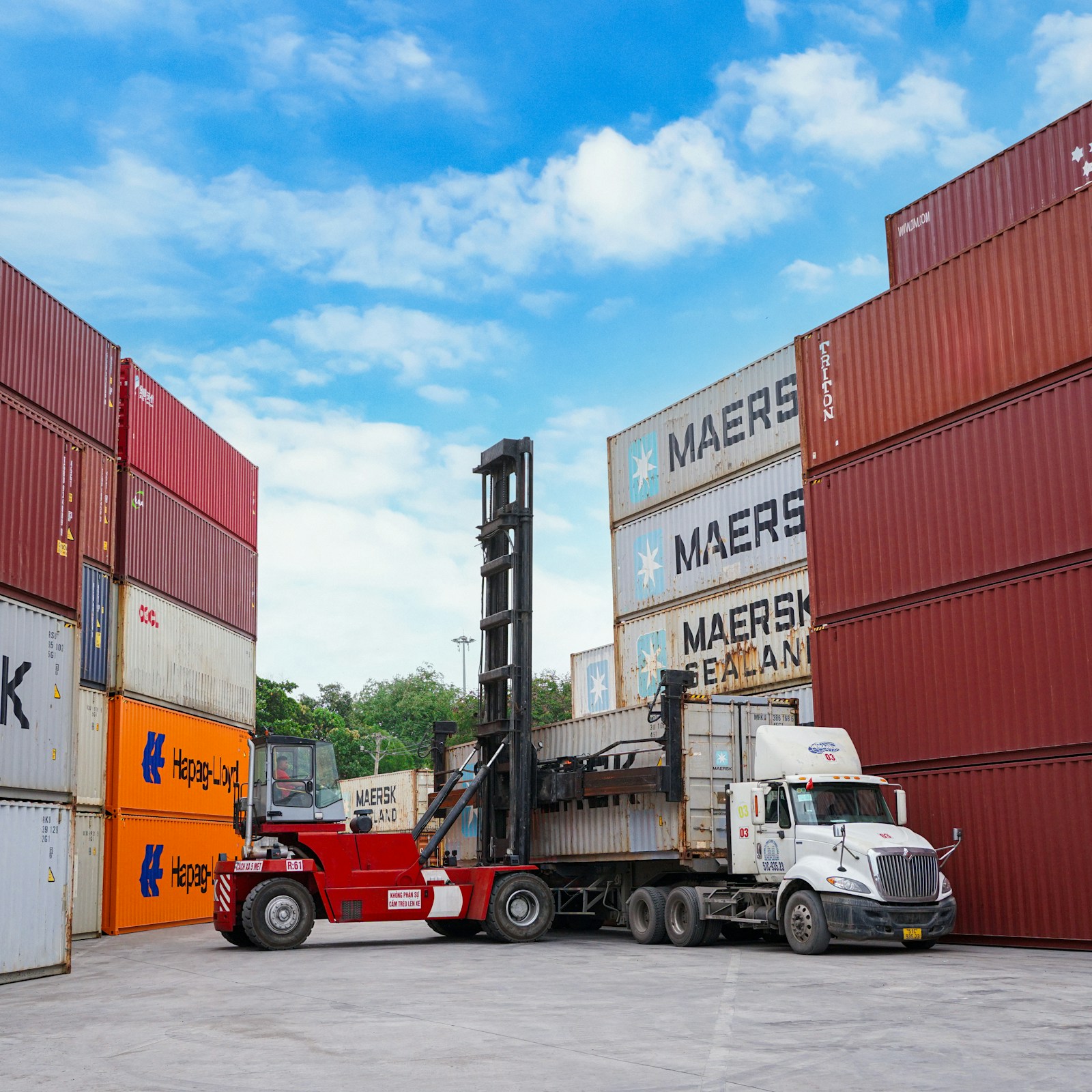
Do You Charge GST/HST to US and International Clients?

Forklift moving shipping containers at a port

Do You Charge GST/HST to US and International Clients?

Stay Ahead With Expert Bookkeeping Insights!
The Best Bookkeeping Tips Straight to Your Inbox!

Table of Contents

Do You Charge GST/HST to Foreign Clients? Usually No

The short answer is that most sales to customers outside Canada are zero-rated. You charge 0% GST/HST, you report the sale on your return, and you still claim input tax credits on the costs of making it. That is a favourable position, and it is one of the reasons exporting Canadian businesses like the GST/HST system.

The longer answer is that “outside Canada” is a legal test, not a shipping address, and the CRA can reassess you for 13% of every foreign invoice if you cannot show the test was met. This article explains what zero-rated means, which exports qualify, which do not, and what records to keep. It builds on the rules in our complete GST/HST guide.

Zero-Rated Versus Exempt

GST/HST has three categories of sale and the difference matters more here than anywhere else.

Taxable sales carry the full rate. Exempt sales, such as most residential rent, most health care and most financial services, carry no tax, but the seller cannot recover the tax paid on related costs. Zero-rated sales are taxable at a rate of 0%: the customer pays nothing, and the seller still claims input tax credits on everything that went into the sale.

Exports fall in the third category. A Toronto software consultant billing a client in Chicago charges no tax and still recovers the HST on her laptop, her office and her subscriptions. If most of your revenue is foreign you will often be in a refund position, which is one good reason to file quarterly or monthly rather than annually.

GST/HST on Exported Goods

Tangible goods are zero-rated when you ship or deliver them to a destination outside Canada. The conditions are practical: the customer must not be buying for consumption in Canada, the goods must leave the country within a reasonable time, and you must keep evidence that they did.

Evidence means shipping documents, customs paperwork, courier tracking, or a carrier’s bill of lading showing a foreign destination. A US customer who picks the goods up from your warehouse in Mississauga and drives them across the border is a harder case; you generally need to charge tax unless you can meet the specific conditions for goods exported by the purchaser.

Online sellers shipping small parcels internationally meet the test easily, as long as the platform or courier records are kept. Our guide to bookkeeping for e-commerce businesses covers the record-keeping side.

Services and Intangibles to Non-Residents

Services supplied to a non-resident are zero-rated under the general rule in Schedule VI of the Excise Tax Act, but the exceptions are where reassessments happen. A service is not zero-rated when it is:

  • supplied to an individual while they are physically in Canada, for example a US tourist getting a haircut or a consultation in your Toronto office;
  • related to real property in Canada, such as managing or inspecting a building here;
  • performed on tangible personal property that is in Canada, such as repairing equipment that stays in Canada;
  • a telecommunication service, or an agent service arranging a taxable sale in Canada;
  • supplied to a non-resident who is registered for GST/HST.

The everyday cases for a Canadian service business, such as consulting, design, software development, marketing or bookkeeping delivered remotely to a US company, fall comfortably inside the zero-rated rule. Intangible property such as software licences, digital content and intellectual property rights follows similar logic: zero-rated to a non-resident who is not registered, as long as the rights are not for use primarily in Canada.

Consultants with a mix of Canadian and foreign clients will find more on structuring this in our guide to bookkeeping for consultants.

The Records That Protect You

The CRA’s position on audit is simple: a zero-rated sale is a taxable sale on which you chose to charge 0%, and the burden of proving you were entitled to do so is yours. The records that satisfy that burden are:

  • the customer’s name and foreign address on the invoice;
  • a statement, in a contract or an email, that the customer is not resident in Canada and, for services, that they are not registered for GST/HST;
  • for goods, proof of export as described above;
  • a note of where the service was performed and where the customer was when they received it.

Show the sale on your invoice with a tax line of $0 and the words “zero-rated” or “export” rather than leaving the tax line blank. It makes the treatment deliberate and obvious to a reviewer.

In your books, use a separate sales tax code for zero-rated sales so they flow to line 90 of the return as taxable sales at 0% and are not mistaken for exempt income. Getting this wrong understates your total taxable supplies, which affects your filing frequency and, for smaller businesses, the registration threshold.

Three Common Mistakes With Zero-Rated Sales

Assuming a foreign address settles it. A US company with an office in Canada that receives your service here is a Canadian supply. Ask where the work is used, not just where the invoice goes.

Forgetting the threshold. Zero-rated revenue counts toward the $30,000 small supplier test. A freelancer with $40,000 of purely American clients must register even though she will never remit a dollar; registration is what lets her claim her credits back.

Confusing GST/HST with US sales tax. Zero-rating is a Canadian question. Whether you owe sales tax in a US state is a separate one governed by that state’s rules, and many states now apply economic nexus thresholds to remote sellers. Selling to the US at any scale means checking both sides of the border.

Selling Outside Canada and Not Sure You're Handling the Tax Correctly?

We review your foreign sales, set up the right tax codes in your books, and put the non-residency records in place so a CRA review is a formality. Most reviews are done within a week.

Book a consultation →

Related articles

image

Personal Services Business: The Tax Trap for Incorporated Consultants

Stay Ahead With Expert Bookkeeping Insights! The Best Bookkeeping Tips Straight to Your Inbox! Table…

image

Rental Property Expenses in Canada: What You Can Deduct on Form T776

Stay Ahead With Expert Bookkeeping Insights! The Best Bookkeeping Tips Straight to Your Inbox! Table…

image

Should a Dentist Incorporate? Dental Professional Corporations in Ontario

Stay Ahead With Expert Bookkeeping Insights! The Best Bookkeeping Tips Straight to Your Inbox! Table…

The HST Quick Method Explained: Who Should Use It and How the Math Works

Business owner working through GST/HST figures on a calculator

The HST Quick Method Explained: Who Should Use It and How the Math Works

Stay Ahead With Expert Bookkeeping Insights!
The Best Bookkeeping Tips Straight to Your Inbox!

Table of Contents

What Is the GST/HST Quick Method?

Most registrants calculate GST/HST the long way: add up every dollar of tax collected, subtract every dollar of tax paid on business purchases, and remit the difference. That works, but it means tracking an input tax credit on every receipt. The Quick Method replaces the second half of that job with a single percentage.

Under the Quick Method you still charge your customers the full rate, 13% in Ontario, 5% in Alberta, and so on. What changes is what you send to the CRA. Instead of remitting everything you collected less your credits, you remit a fixed percentage of your tax-included sales and keep the rest. The percentage is set below the rate you charge, and the gap is meant to approximate the credits you would otherwise have claimed.

For a service business with few taxable purchases, the gap is usually bigger than the credits it replaces. That difference is real money, and it is taxable income. This article, a companion to our complete GST/HST guide, walks through eligibility, the rates, a worked example and how to decide. If you just want the answer for your own numbers, use our free HST quick method calculator.

Who Can Use the Quick Method

The Quick Method is open to most small businesses whose worldwide annual taxable supplies, including GST/HST and including any associated businesses, are $400,000 or less. The test looks at the four fiscal quarters before the one in which you make the election, or any four consecutive quarters in the last five.

The CRA excludes a specific list of businesses regardless of size. You cannot use the Quick Method if you provide legal, accounting or actuarial services, or if you are a bookkeeper, financial consultant, tax preparer or tax consultant. Charities, public institutions, non-profits with substantial government funding, municipalities, universities, hospitals and listed financial institutions are excluded as well. If you are in one of these groups, the regular method is your only option.

Everyone else, from consultants and designers to trades, cleaners, restaurants and small retailers, can elect in.

Quick Method Remittance Rates by Province

The rate you remit depends on two things: whether you mainly sell services or goods, and which province your business and your customers are in. The CRA publishes the full grid in guide RC4058, but the common cases look like this:

Business location and where you sellMainly servicesMainly goods for resale
Ontario, selling in Ontario (13% HST)8.8%4.4%
Nova Scotia, New Brunswick, PEI, Newfoundland (15% HST)10%5%
Alberta, BC, Manitoba, Saskatchewan, territories (5% GST)3.6%1.8%

The rates are applied to your tax-included sales, so an Ontario consultant who invoices $10,000 plus $1,300 HST multiplies $11,300 by 8.8%, not $10,000.

“Mainly goods” means purchases of goods for resale, plus their freight, were at least 40% of your annual taxable sales. Most service businesses will not meet that and use the higher rate. If you sell into other provinces you may need more than one rate; your bookkeeping software can handle that, but it needs to be set up deliberately.

On top of the rate, you receive a credit equal to 1% of the first $30,000 of tax-included sales in each fiscal year. That is worth up to $300 a year and it is applied on your first return of the year.

Quick Method Worked Example (Ontario)

Take an Ontario marketing consultant with $120,000 in annual sales to Ontario clients and $8,000 of taxable operating expenses such as software, phone, a coworking desk and a laptop.

Regular method. She collects 13% on $120,000, which is $15,600. She paid 13% on $8,000 of expenses, giving input tax credits of $1,040. She remits $14,560.

Quick Method. Her tax-included sales are $135,600. At 8.8% that is $11,933. Subtract the 1% credit on the first $30,000, which is $300. She remits $11,633.

The Quick Method leaves her $2,927 better off for the year. That amount is added to her income for tax purposes, so the after-tax benefit is smaller, but it is still well over $2,000 for no extra work.

Now change one assumption. If her taxable expenses were $30,000 instead of $8,000, perhaps because she subcontracts a lot of the work, her regular-method credits would be $3,900 and she would remit $11,700 under the regular method. At that point the two methods are within $70 of each other, and above that level of spending the regular method wins.

The break-even for a 13% service business is roughly taxable expenses equal to a quarter of sales. Below that, the Quick Method usually wins. Above it, it usually loses.

What You Give Up With the Quick Method

The trade is straightforward: you stop claiming input tax credits on operating expenses. Rent, software, subcontractors, supplies, advertising, professional fees, all of it. The flat rate is meant to compensate you for that, and for many businesses it does more than compensate.

Capital purchases are the exception. You can still claim the full credit on equipment, computers, vehicles and other capital property, and on improvements to them. If you are about to buy a $40,000 truck, you do not lose the $5,200 of HST on it by being on the Quick Method.

The other thing you give up is simplicity of a different kind. Your invoices still show the full tax and your customers still claim it, but your own return no longer reconciles to “collected minus paid.” Your bookkeeper needs to know you have elected, and your accounting software needs the Quick Method rate configured, or your return will be wrong in the CRA’s favour.

How to Elect and When It Takes Effect

You elect by filing Form GST74 or through your CRA business account. The election generally takes effect at the start of a reporting period, and it has to be filed by the due date of the return for that period. Annual filers therefore have a wide window; monthly and quarterly filers need to plan a period ahead.

Once you are in, you must stay on the Quick Method for at least one year before you can revoke it, unless you become ineligible. If your sales cross the $400,000 threshold, the election stops applying from the start of the next fiscal year.

A practical note: the election is per business, not per owner. If you run two registered businesses, each one needs its own decision and its own form.

Not Sure Which Method Is Cheaper for You?

Start with the quick method calculator to see which side you land on. Then send us a year of sales and expenses and we will run both calculations on your actual figures, tell you the difference in dollars, and file the election if it makes sense. It usually takes a day.

Book a consultation →

Related articles

image

Personal Services Business: The Tax Trap for Incorporated Consultants

Stay Ahead With Expert Bookkeeping Insights! The Best Bookkeeping Tips Straight to Your Inbox! Table…

image

Rental Property Expenses in Canada: What You Can Deduct on Form T776

Stay Ahead With Expert Bookkeeping Insights! The Best Bookkeeping Tips Straight to Your Inbox! Table…

image

Should a Dentist Incorporate? Dental Professional Corporations in Ontario

Stay Ahead With Expert Bookkeeping Insights! The Best Bookkeeping Tips Straight to Your Inbox! Table…

GST/HST Guide for Canadian Small Business: Rates, Registration and Filing

Small business owner serving a customer at a shop counter

GST/HST Guide for Canadian Small Business: Rates, Registration and Filing

Small business owner serving a customer at a shop counter
Stay Ahead With Expert Bookkeeping Insights!
The Best Bookkeeping Tips Straight to Your Inbox!

Table of Contents

What Is GST/HST?

The most useful thing to understand about GST/HST is that it is not your money and it is not your tax. You are an unpaid collection agent for the federal government.

Goods and Services Tax is a 5% federal value-added tax that applies to most goods and services sold in Canada. In five provinces it is combined with the provincial sales tax into a single Harmonized Sales Tax, administered by the CRA under one return. In the rest of the country, GST sits alongside a separate provincial tax, or, in Alberta and the three territories, alongside nothing at all.

“Value-added” is the part that trips people up. You charge tax on what you sell, you pay tax on what you buy, and you send the government the difference. If you collected $4,000 in a quarter and paid $1,500 on business expenses, you remit $2,500. The tax is designed to fall on the final consumer, and businesses in the chain should end up neutral.

This is why treating GST/HST as revenue is the most common and most damaging mistake we see in small business bookkeeping. An owner looks at a healthy bank balance in month two of a quarter, spends against it, and then discovers in month four that a meaningful chunk of it belonged to the Receiver General. If you take nothing else from this guide: move the tax out of your operating account the moment you invoice, or at minimum every month.

A note on terminology

You will see “GST/HST” written as one thing throughout CRA material because it is one tax with two rates depending on province. There is no separate HST return. If you are registered, you are registered for both, and you charge whichever applies to the transaction.

Customer paying by card at a small business

The short version

  • You must register once your taxable revenue passes $30,000 over four consecutive calendar quarters: that’s worldwide revenue from taxable sales, not profit.
  • The rate depends on where your customer is, not where you are. A Winnipeg consultant billing a Toronto client charges 13%, not 5%.
  • You only remit the difference between tax you collected and tax you paid on business purchases. The money you collect was never yours.
  • Most small businesses file annually (revenue under $1.5 million), but may owe quarterly instalments if their net tax hits $3,000.
  • Late-filing penalties are modest; failing to register on time is expensive, because the CRA can assess the tax you should have charged.

What Is GST?

GST is the Goods and Services Tax, a 5% federal tax on most goods and services sold in Canada. It applies in every province and territory. In Alberta, Yukon, the Northwest Territories and Nunavut it is the only sales tax. In British Columbia, Saskatchewan, Manitoba and Quebec it is charged alongside a separate provincial tax that has its own registration and returns.

A registered business collects GST from its customers and remits it to the CRA, less the GST it paid on its own business purchases. Some supplies are zero-rated, meaning taxable at 0%, such as basic groceries and most exports. Others are exempt, such as most residential rent, health care and financial services, and carry no GST at all.

What Is HST?

HST is the Harmonized Sales Tax: the 5% federal GST combined with a provincial portion into a single tax. It applies in Ontario at 13%, Nova Scotia at 14%, and New Brunswick, Newfoundland and Labrador and Prince Edward Island at 15%. The CRA administers it as one tax on one return, which is why CRA material always writes it as “GST/HST”.

If you are registered, you are registered for both. You charge HST to customers in HST provinces and GST to customers elsewhere, based on where the customer receives the goods or services, not where your business is located. The full rate table is further down this guide.

Do You Have to Register for GST/HST?

You are a small supplier, and therefore not required to register, while your total taxable revenue stays at or below $30,000 over four consecutive calendar quarters. Three details about that sentence matter more than the number itself.

It is revenue, not profit. A sole proprietor who bills $44,000 and nets $19,000 after expenses is over the threshold. The test never looks at your margin.

It is a rolling four-quarter window, not a calendar year. The four quarters ending 30 September are just as capable of putting you over as the four ending 31 December. Many owners check once a year in April and discover they crossed the line the previous summer.

It is worldwide taxable revenue, including zero-rated sales. Zero-rated supplies (exports, basic groceries, most prescription drugs and medical devices) are taxable at 0%, which still counts toward the threshold. Exempt supplies, such as most residential rent, most health care services and most financial services, do not.

Crossing the threshold: two different consequences

How you cross matters, because the CRA treats the two cases differently.

If you exceed $30,000 in a single calendar quarter, you stop being a small supplier immediately. You are considered registered as of the sale that pushed you over, and you must charge GST/HST on that very sale. There is no grace period.

If you exceed $30,000 cumulatively across four consecutive quarters but not in any single one, you remain a small supplier for one additional month. You must be registered by the first day of the month after that, and charge tax from that date.

Miss either deadline and the CRA can assess you for tax you should have collected but didn’t, which you now owe out of your own pocket, because you cannot realistically go back to customers a year later and ask for another 13%. This is the expensive failure mode, and it is far more costly than any late-filing penalty.

Registering voluntarily is often the better call

Below $30,000 you may register anyway, and frequently should. If you sell mainly to other registered businesses, your prices are effectively unchanged to them (they claim back what you charge), while you start recovering tax on your own equipment, software, fuel and professional fees. The calculus flips if you sell mainly to consumers, where adding 13% is a real price increase you absorb or pass on. Businesses with heavy start-up purchases often register early purely to recover the tax on them.

GST/HST Rates by Province

The rate is set by the place of supply (broadly, where the customer receives the goods or services), not by where your business is located. A Vancouver bookkeeper serving a client in Halifax charges Nova Scotia’s rate.

Province / TerritoryTypeTotal rateNotes
OntarioHST13%5% federal + 8% provincial
Nova ScotiaHST14%Reduced from 15% on 1 April 2025
New BrunswickHST15%
Newfoundland & LabradorHST15%
Prince Edward IslandHST15%
British ColumbiaGST + PST5% + 7%PST filed separately with the province
ManitobaGST + RST5% + 7%RST filed separately with the province
SaskatchewanGST + PST5% + 6%PST filed separately with the province
QuebecGST + QST5% + 9.975%Both administered by Revenu Québec
AlbertaGST only5%No provincial sales tax
Yukon, NWT, NunavutGST only5%No territorial sales tax

The separate provincial taxes in BC, Manitoba, Saskatchewan and Quebec are a different system with their own registration rules, returns and deadlines, and, importantly, no equivalent of input tax credits in most cases. PST paid on business inputs is usually a cost, not a recoverable amount. Businesses operating across those provinces carry a real compliance burden that HST provinces do not.

Claiming Input Tax Credits

An input tax credit (ITC) is your claim for GST/HST paid on purchases made to earn taxable revenue. It is the mechanism that keeps the tax from compounding at every stage, and it is where most recoverable money goes unclaimed.

You can claim ITCs on essentially any business input that carries tax: inventory, equipment, software subscriptions, professional fees, commercial rent, fuel, advertising, phone and internet. Where an expense is partly personal (a home office, a vehicle used for both), you claim only the business proportion, and you need a defensible basis for that split.

Documentation is the whole game

ITC claims are the most common target in a CRA review, and they are usually denied for missing paperwork rather than ineligibility. The documentation required scales with the amount:

  • Under $100: supplier name, date, and total amount paid.
  • $100 to $499.99: the above, plus the supplier’s GST/HST registration number and either the amount of tax charged or a statement that the total includes it.
  • $500 and over: all of the above, plus the buyer’s name, the terms of payment, and a description of the goods or services.

These are the thresholds in force since 20 April 2021, when they were raised from the old $30 and $150 tiers. Amounts are the total including tax. Older guidance still circulating quotes the previous figures.

A credit card statement is not sufficient documentation. It proves you spent money; it does not prove tax was charged, by whom, or on what. Keep the actual receipt or invoice, which is why receipt-capture tools have become standard practice rather than a nicety.

You generally have four years to claim an ITC you missed, so a catch-up exercise on a neglected year is usually still worth doing.

The registration number check

If a supplier charges you tax but isn’t registered, your ITC can be denied: you were never charged legitimate GST/HST. For any significant recurring supplier, confirm the number in the CRA’s GST/HST Registry once, at the start of the relationship. It takes a minute and it is the kind of thing that only matters after an audit has already started.

GST/HST Filing Frequency: Monthly, Quarterly or Annual

The CRA assigns a default reporting period based on your annual taxable supplies:

Annual taxable suppliesDefault periodCan you elect more often?
$1.5 million or lessAnnualYes, monthly or quarterly
Over $1.5M to $6 millionQuarterlyYes, monthly
Over $6 millionMonthlyAlready the most frequent

You can always elect to file more frequently than your default, never less. That sounds like a burden to take on voluntarily, but there are two good reasons to do it.

The first is cash discipline. Annual filers accumulate twelve months of collected tax and then face a single large payment, which is precisely the situation where the money has already been spent. Quarterly filing keeps the liability visible and the amounts survivable.

The second is refunds. If you are consistently in a refund position (common for exporters, for businesses in a heavy investment phase, and for anyone selling mostly zero-rated goods), annual filing means lending the government your money for up to a year. Monthly filing gets it back promptly.

Annual filers whose net tax for the year is $3,000 or more must make quarterly instalment payments toward the following year, each due one month after the quarter ends. Miss them and the CRA charges instalment interest even if the final return is filed on time.

The GST/HST Quick Method

The Quick Method is a simplification available to businesses with annual taxable supplies of $400,000 or less including GST/HST. Instead of tracking ITCs on every purchase, you charge tax normally but remit a reduced flat percentage of your tax-included revenue, and keep the difference.

The remittance rate depends on your province and on whether you mainly sell goods or services. Service businesses in HST provinces get a rate well below the rate they charge, and the gap is real profit. There is also a 1% credit on the first $30,000 of eligible supplies each year.

The trade-off is that you give up ITCs on operating expenses. You may still claim them on capital purchases like equipment and vehicles, but not on rent, software, supplies or subcontractors. That makes the Quick Method attractive for low-overhead service businesses (consultants, trades with few materials, professional practices), and unattractive for anyone with significant taxable inputs.

The arithmetic is specific to your numbers. Run both methods on a full year of actual data before electing; the difference is frequently a four-figure sum in either direction. Our free HST quick method calculator does the comparison in seconds, and our HST Quick Method guide explains who should use it and how the math works.

GST/HST Filing Deadlines and Payments

Filer typeReturn duePayment due
MonthlyOne month after period endSame date
QuarterlyOne month after period endSame date
Annual: corporationThree months after fiscal year endSame date
Annual: self-employed individual with a 31 Dec year end15 June30 April

That last row is a genuine trap and worth reading twice. The filing deadline and the payment deadline are six weeks apart. Interest starts running from 30 April on any balance owing, even though your return isn’t late until 15 June. Plan to have the number by April. Self-employed filers can find the rest of their obligations in our sole proprietor tax guide, and every date for the year is in the Canadian small business tax deadlines calendar.

The late-filing penalty is calculated as 1% of the amount owing, plus 25% of that 1% multiplied by the number of complete months the return is late, to a maximum of twelve months. On a $10,000 balance three months late that is roughly $175: unpleasant but survivable. Interest compounds daily on top. If you cannot pay, file anyway: the penalty is driven by the unfiled return, and filing on time with a balance owing costs you only interest.

Common GST/HST Mistakes

In our practice, the same handful of problems account for the large majority of GST/HST cleanup work.

Spending the tax. Already covered, and still number one. A separate savings account with an automatic transfer solves it permanently.

Charging the wrong provincial rate. Usually a business that set up its accounting software with one default rate and never revisited it after landing out-of-province clients. The error compounds silently across hundreds of invoices: our guide to accounting software for Canadian businesses covers how the tax codes should be set up.

Claiming ITCs on exempt or personal expenses. Client meals are only 50% deductible for income tax, and the ITC follows the same restriction. Personal use portions of vehicles and home offices need documented reasoning.

Missing registration by months. Almost always a business that grew faster than expected and checked the threshold once a year. If that has already happened, see how to fix a late GST/HST registration.

Filing nil returns while inactive. If you are registered you must file every period, even with no activity. Unfiled nil returns accumulate penalties and can trigger arbitrary CRA assessments that are a real nuisance to unwind.

Frequently Asked Questions About GST/HST

Do I charge GST/HST to a US client?

Generally no: exports of goods and services to non-residents are usually zero-rated, meaning you charge 0% but still claim ITCs on related inputs. The rules around what qualifies are more technical than they first appear, particularly for services and intangibles, so confirm your specific situation rather than assuming. Our guide to charging GST/HST to US and international clients walks through the common cases. Consultants with foreign clients will find more in our guide to bookkeeping for consultants, and online sellers in bookkeeping for e-commerce businesses.

What if I registered but haven’t hit $30,000?

Then you charge, collect and remit like any other registrant. Voluntary registration carries the same obligations as mandatory registration, including filing every period. You must generally stay registered for at least one year before deregistering.

Can I claim ITCs on purchases made before I registered?

In limited circumstances, yes, notably on inventory on hand and certain capital property at the time of registration. This is worth asking about if you registered after a period of significant purchasing.

My customer won’t pay the tax. Now what?

You still owe it. GST/HST is payable on the invoice date under accrual accounting, regardless of whether you have been paid. If the debt goes bad you may be able to recover the tax through a bad debt adjustment, but you cannot omit it.

Not Sure Whether You've Crossed the Threshold?

We review your last four quarters, confirm your registration position, and clean up the filings if you’re behind. Most reviews take under a week.

Book a consultation →

Related articles

image

Personal Services Business: The Tax Trap for Incorporated Consultants

Stay Ahead With Expert Bookkeeping Insights! The Best Bookkeeping Tips Straight to Your Inbox! Table…
image

Rental Property Expenses in Canada: What You Can Deduct on Form T776

Stay Ahead With Expert Bookkeeping Insights! The Best Bookkeeping Tips Straight to Your Inbox! Table…

image

Should a Dentist Incorporate? Dental Professional Corporations in Ontario

Stay Ahead With Expert Bookkeeping Insights! The Best Bookkeeping Tips Straight to Your Inbox! Table…

HST Registration in Canada: How to Get a GST/HST Number

Small business owner standing at the counter of her coffee shop

HST Registration in Canada: How to Get a GST/HST Number

Small business owner standing at the counter of her coffee shop
Stay Ahead With Expert Bookkeeping Insights!
The Best Bookkeeping Tips Straight to Your Inbox!

Table of Contents

When Do You Need to Register for GST/HST?

For many Canadian entrepreneurs, GST/HST is the first real tax question they run into. Charge it when you shouldn’t and you’ve made yourself more expensive than the competition; fail to register when you must and the CRA can come looking for tax you never collected. The good news is that the core rules are clearer than they first appear.

This guide walks through when registration is mandatory, when it’s optional and worth doing anyway, which rate to charge depending on where your customer is, how filing works once you’re registered, and what it costs to get it wrong.

The essentials

  • The $30,000 rule: You must register once your worldwide taxable sales exceed $30,000 in a single calendar quarter or over four consecutive calendar quarters. Below that, you’re a “small supplier” and registration is optional.
  • Timing matters: Cross the threshold in one quarter and you must charge tax on the very sale that put you over, then register within 29 days.
  • Voluntary registration lets you recover the GST/HST you pay on business purchases through input tax credits, which is often worth it for B2B businesses and anyone with large start-up costs.
  • Which rate you charge depends on your customer’s province, not yours: 5% GST in Alberta, the territories and the PST/QST provinces; 13% HST in Ontario; 14% in Nova Scotia; 15% in New Brunswick, PEI and Newfoundland and Labrador.
  • Filing frequency is set by revenue: annual under $1.5 million, quarterly to $6 million, monthly above that.
  • Register late and you still owe the tax. The CRA can backdate your registration and assess GST/HST on sales you never charged it on, plus interest and penalties.

What Is the Small Supplier Threshold?

The starting point for every GST/HST question is the small supplier rule. You are a small supplier, and therefore not required to register, as long as your total worldwide taxable supplies stay at or below $30,000 in both of these tests:

  • a single calendar quarter (January–March, April–June, July–September, October–December), and
  • the last four consecutive calendar quarters combined.

A few details trip people up:

  • “Taxable” includes zero-rated sales. Exports, basic groceries and other zero-rated supplies are taxed at 0%, but they still count toward the $30,000. Only exempt supplies (see below) are left out.
  • It’s worldwide revenue. Sales to customers outside Canada count.
  • Associated businesses are combined. If you control more than one company, or a corporation and a sole proprietorship, their taxable sales are added together for the test.
  • Certain amounts are excluded: sales of capital property (such as selling a vehicle or equipment you used in the business), goodwill and financial services don’t count.
  • Public service bodies such as non-profits have a higher $50,000 threshold, and charities have an additional gross-revenue test.

The threshold has been $30,000 since 1991 and is not indexed to inflation, so a growing number of part-time and side-hustle businesses now cross it without realizing.

When GST/HST Registration Becomes Mandatory

Once you stop being a small supplier, you must register for a GST/HST account and start charging tax. Exactly when depends on how you crossed the line:

Scenario 1: You exceed $30,000 in a single calendar quarter. You stop being a small supplier immediately. Your effective date of registration is the day of the sale that pushed you over, you must charge GST/HST on that sale and every sale after it, and you have 29 days from that date to register.

Scenario 2: You exceed $30,000 over four consecutive quarters, but not in any single quarter. You stay a small supplier until the end of the month following the quarter in which you crossed the threshold. Your first sale after that month is your effective date, and you must register within 29 days of it. Example: if your trailing four-quarter sales pass $30,000 in November 2026, you remain a small supplier through January 31, 2027 and must charge tax on your first sale in February.

Some businesses must register regardless of revenue:

  • Taxi and commercial ride-sharing drivers (including Uber and Lyft) must register from their first fare.
  • Non-resident performers selling admissions to events in Canada.
  • Non-resident sellers of digital products and services, and the platforms that facilitate them, have their own simplified registration regime once Canadian sales exceed $30,000 in a 12-month period.

If you’re close to the threshold, track your quarterly sales carefully. Many business owners discover they crossed it months earlier than they thought, and the CRA applies the rules from the actual date, not the date you noticed.

Taxable, Zero-Rated and Exempt: What's the Difference?

Whether you need to register, and what you can recover, depends on what type of supplies your business makes.

  • Taxable supplies are the default. Most goods and services sold in Canada, from consulting and construction to software and retail, are taxable at the GST or HST rate for the customer’s province. They count toward the $30,000 threshold, and once registered you charge tax on them and claim input tax credits on related purchases.
  • Zero-rated supplies are taxable at 0%. They include basic groceries, prescription drugs, certain medical devices, agricultural products, and most exports of goods and services to non-residents. You charge no tax, but these sales do count toward the threshold, and you can claim input tax credits on the costs of producing them. Exporters often register voluntarily for exactly this reason.
  • Exempt supplies are outside the GST/HST system altogether. They include most health, dental and medical services, child care, music lessons, educational courses leading to a certificate, long-term residential rent, used residential housing, and most financial services. Exempt sales do not count toward the threshold, you cannot charge tax on them, and you cannot claim input tax credits for the costs of making them.

Businesses with a mix, such as a chiropractor who also sells taxable products, or a landlord with both residential and commercial units, need to track each category separately. If all of your revenue is exempt, you can’t register even if you want to.

GST vs. HST: Which Rate Do You Charge?

The single GST/HST registration covers both taxes, but the rate you charge is set by the place of supply, which for most goods and services is the province where your customer receives them, not where your business is located. An Alberta consultant billing an Ontario client charges 13% HST; an Ontario retailer shipping to Calgary charges 5% GST.

Province / TerritoryFederal GSTProvincial portionWhat you charge
Alberta, Yukon, Northwest Territories, Nunavut5%None5% GST
British Columbia5%7% PST (separate)5% GST (+ PST if registered with BC)
Saskatchewan5%6% PST (separate)5% GST (+ PST if registered with SK)
Manitoba5%7% RST (separate)5% GST (+ RST if registered with MB)
Quebec5%9.975% QST (separate)5% GST (+ QST if registered with Revenu Québec)
Ontario5%8%13% HST
Nova Scotia5%9%14% HST (reduced from 15% on April 1, 2025)
New Brunswick, Prince Edward Island, Newfoundland and Labrador5%10%15% HST

Two practical notes. First, the provincial sales taxes in BC, Saskatchewan, Manitoba and Quebec are separate registrations with their own thresholds and rules; your CRA GST/HST account doesn’t cover them. Second, if you’re located in Quebec, Revenu Québec administers both GST and QST, so you register with them rather than the CRA.

Voluntary Registration: Should You Register Early?

If you’re still under $30,000, you can choose to register anyway, as long as you make (or intend to make) taxable supplies. For many businesses this is the smarter path.

Advantages

  • Recover tax on start-up costs. Equipment, inventory, software, professional fees and leasehold improvements all carry GST/HST. Registering before you buy them lets you claim it back through input tax credits, which can be a meaningful cash injection in year one.
  • No surprise threshold crossing. You won’t have to scramble to register mid-quarter or explain to a customer why their invoice suddenly has tax on it.
  • Credibility. Larger clients and government buyers often expect a GST/HST number on invoices, and some won’t onboard a supplier without one.

Disadvantages

  • Administration. You take on the obligation to charge, track, file and remit on schedule, even in slow years.
  • Price sensitivity. If your customers are individuals who can’t recover the tax, your effective price rises by 5% to 15% overnight.
  • You’re committed. Once you register voluntarily, you generally must stay registered for at least one year before you can cancel.

When voluntary registration usually makes sense

  • Your customers are mostly other businesses that can claim the tax back, so it costs them nothing.
  • You have significant purchases coming before revenue arrives.
  • You export or make other zero-rated supplies and want to recover input tax.
  • You expect to cross $30,000 within the year anyway.

The main case for staying unregistered is a consumer-facing business with low costs, a freelance tutor or a weekend market vendor, for example, whose customers would pay more.

How to Register for a GST/HST Account

Registration is free and usually takes less than half an hour. You’ll need a Business Number (BN) first; if you don’t have one, it’s issued as part of the same process. Your GST/HST account number is your nine-digit BN followed by RT0001. Our guide to the CRA business number explains how the BN and its program accounts fit together.

How to register

  • Online: since November 2025 the CRA requires new business numbers and GST/HST accounts to be registered online, through Business Registration Online or from within My Business Account. You sign in with your CRA account, and you get your account number immediately.
  • Exceptions: a few situations, such as reactivating a closed account or a business owned only by non-residents, still go through the CRA business enquiries line at 1-800-959-5525 or a paper Form RC1.
  • Quebec businesses: register with Revenu Québec, which administers GST alongside QST.

Decisions you’ll make at registration

  • Effective date. Use the date you were required to register (see above) or, for voluntary registration, the date you want to start charging tax. You can backdate a voluntary registration by up to 30 days.
  • Fiscal year-end. Most sole proprietors use December 31. Corporations usually match their corporate year-end.
  • Reporting period. The CRA assigns annual, quarterly or monthly filing based on your expected revenue, but you can elect a more frequent period if you expect refunds (common for exporters and start-ups with heavy purchases).

Once registered, your GST/HST number must appear on every invoice where you charge tax. Customers need it to claim their own input tax credits, and the CRA uses it to verify that the tax you collected is being remitted.

GST/HST Reporting Periods and Filing Deadlines

Your reporting period is based on your annual taxable supplies (including those of associated businesses):

Annual taxable suppliesAssigned reporting periodCan you elect more frequent?
$1,500,000 or lessAnnualYes: quarterly or monthly
$1,500,001 to $6,000,000QuarterlyYes: monthly
More than $6,000,000MonthlyN/A

When returns and payments are due

  • Monthly and quarterly filers: return and payment are due one month after the end of the reporting period.
  • Annual filers who are self-employed with a December 31 year-end: payment is due April 30, and the return is due June 15, matching your personal tax deadlines.
  • All other annual filers (including corporations): return and payment are due three months after your fiscal year-end.

Annual filers whose net tax was $3,000 or more in the previous year must also pay quarterly instalments, due one month after the end of each fiscal quarter, with the balance settled when the annual return is filed.

Every return must be filed even if you owe nothing or are due a refund, and most registrants are now required to file electronically through My Business Account, GST/HST NETFILE or their accounting software. For a full calendar of the coming year’s dates, see our guide to Canadian tax filing deadlines for 2027.

Input Tax Credits and the Quick Method

Registration isn’t only an obligation; it’s also how you get money back.

Input tax credits (ITCs) let you recover the GST/HST you pay on purchases and expenses used in your commercial activities: rent, supplies, equipment, software subscriptions, professional fees, advertising and more. On each return you report the tax you collected, subtract your ITCs, and remit (or receive) the difference. To support a claim you need a proper receipt or invoice; for purchases over $100, it must show the supplier’s GST/HST registration number. ITCs can generally be claimed up to four years after the period in which the expense was incurred, so missed credits aren’t lost forever, but the best practice is to book them as you go.

The Quick Method is a simplified alternative for small businesses with annual worldwide taxable sales (including GST/HST) of $400,000 or less. Instead of tracking ITCs on every purchase, you remit a fixed percentage of your tax-included sales; for example, a service business in Ontario remits 8.8% of HST-included revenue rather than the full 13% collected, and keeps the difference to cover the tax paid on its expenses. A 1% credit also applies to the first $30,000 of eligible sales each year. You still claim ITCs on capital purchases such as equipment and vehicles. The Quick Method often produces a lower net remittance for service businesses with few taxable expenses, but it isn’t available to certain professionals, including accountants, bookkeepers, lawyers and financial consultants, and it must be elected in advance. Running the numbers both ways before you elect is worth the effort.

What Happens If You Should Have Registered but Didn't

This is the scenario that turns a routine compliance question into a real cost. If the CRA determines you crossed the threshold and didn’t register, it can:

  • Register you retroactively to the date you were required to register, which may be years earlier.
  • Assess the GST/HST you should have collected on every taxable sale since that date. Because you didn’t charge it, the CRA treats your prices as tax-included and backs the tax out of your revenue, so a $10,000 Ontario invoice is treated as $8,850 plus $1,150 of HST that you now owe. Recovering that from past customers is rarely practical, so it usually comes out of your own pocket.
  • Charge interest at the prescribed rate, compounded daily, from each original due date.
  • Apply late-filing penalties of 1% of the amount owing plus 0.25% per full month late, for up to 12 months, on every return that should have been filed, plus a $250 penalty for any return not filed after a formal demand.

On the other side, you can partly offset the assessment by claiming the ITCs you would have been entitled to over the same period, provided you have the receipts. Good records dramatically reduce the damage.

If you realize you’ve crossed the threshold without registering, act quickly rather than waiting to be found. Registering voluntarily with a backdated effective date, and using the CRA’s Voluntary Disclosures Program where appropriate, can reduce or eliminate penalties. This is a situation where a conversation with an accountant before you contact the CRA pays for itself many times over.

Ready to Get Your GST/HST Set Up Right?

Whether you’re approaching the $30,000 threshold, weighing voluntary registration, or worried you may already be behind, the right guidance saves time and avoids expensive mistakes. Targeted Accounting works with Canadian small business owners to register correctly, choose the filing frequency and method that fit your cash flow, and keep every return filed on time.

Our bookkeeping service tracks GST/HST collected and paid as part of your regular monthly close, so filing becomes a routine task rather than a quarterly scramble. Contact us today to book a consultation and take the guesswork out of GST/HST.

This article reflects CRA rules and rates as of September 2026. Thresholds and provincial rates are subject to change; confirm your specific obligations with your accountant.

Related articles

image

Personal Services Business: The Tax Trap for Incorporated Consultants

Stay Ahead With Expert Bookkeeping Insights! The Best Bookkeeping Tips Straight to Your Inbox! Table…
image

Rental Property Expenses in Canada: What You Can Deduct on Form T776

Stay Ahead With Expert Bookkeeping Insights! The Best Bookkeeping Tips Straight to Your Inbox! Table…
image

Should a Dentist Incorporate? Dental Professional Corporations in Ontario

Stay Ahead With Expert Bookkeeping Insights! The Best Bookkeeping Tips Straight to Your Inbox! Table…